

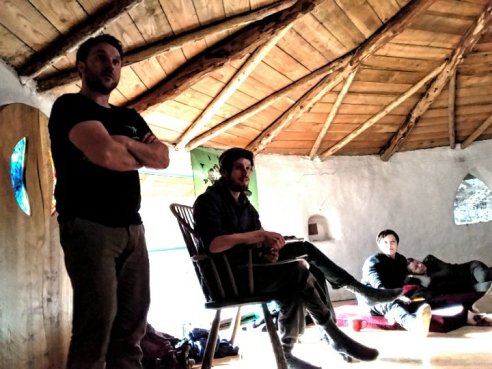
This weekend I was invited to attend the Landworkers Alliance woodland branch manifesto meeting. There are many people who work in woodlands and this offshoot hopes to reflect and promote the needs of those workers.
The LWA Woodland Branch’s manifesto is being developed to be presented to governing bodies and they wanted to know what issues us woodland folk have.
Some of the issued raised included earning a living wage, suitable housing, lack of contracts and stability, lack of education and awareness of management practices and awareness british woodland products.
One of the key issues for me is the lack of awareness of woodland workers, the products that they create and the importance of supporting these businesses. For example, a lot of our firewood and charcoal is imported. This is diabolical when we have so much unmanaged woodland in our own country, and a fair few people willing to manage them, if only they could afford it.
Most woodland workers could afford this if they were allowed to live in low impact dwelling in the woods they managed. Sometimes this is possible but usually the set up is precarious and threatened with the specter of the planning department. The lack of contracts and agreements can also leave people in limbo when it comes to their rights to live on and manage the woodland. People are often given short notice to move on, which can be a blow after you’ve spent so much time, energy and resources into bringing a woodland back to life.
Most woodlands workers could also afford this if they were supported by the public and the government. Currently there are no subsidies available for small woodland workers and so unless one is happy to live in a yurt, which to be fair a lot of us are, you’re going to struggle to make an income. Yet woodland work is just as important as the food industry, and even has the added bonus of being of benefit to the environment. Woodlands have been managed for thousands of years by humans, and for millions of years by the movement and browsing of large roaming mammals. This is a vital practice for the continuation of many woodland species yet 50% of our woodlands are still unmanaged.
In the past workers could survive on the low income/high lifestyle benefits of woodland work. But with the increasing, and unrealistic, rental and house prices, the demand for cheap imports and the lack of public education on woodland management it becomes a difficult enviroment to flourish in. The LWA Woodland Branch plan on changing that.


All businesses that relie upon subsides, be that grants or direct payments, in order to be economically viable are nonstarters. If it doesn’t work on its own merits the business model is wrong and needs addressing.
Cooperatives be they local, regional or national appear to be the way forward imo
LikeLike
A subsidised system could give woodland workers a living wage for the process of managing woodlands as well as selling sustainable products. Our woodlands need managing – like our food needs growing but it’s not currently seen as essential, even though we supply people with many useful, sustainable, biodegradable products. Instead we import wood and wood based products, leaving our own woodlands unmanaged and no one able to afford to make home grown sustainable products.
LikeLike