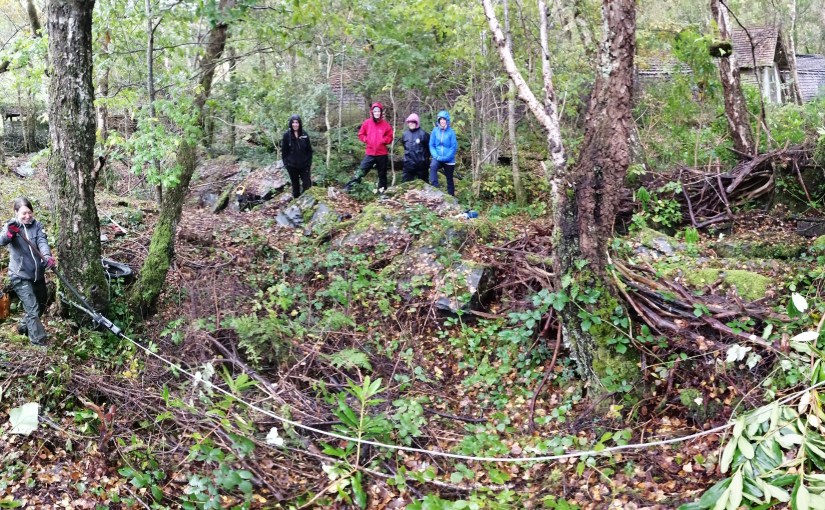
For many human beings the woods were our natural habitat. Our ancestors spent thousands, if not millions, of years in this environment and so our senses are designed to cope with the ever changing sights, sounds, temperature and light that we experience in the woods. Its no wonder we can go a little bit loopy when we’re stuck in the relatively static environment of the office or the school room that contrasts so starkly to our natural habitat. Our senses don’t have enough to do and the energy is often redirected to mental rumination and stress.
Its not big news that a walk in the woods makes us feel better, but now we have the statistics and evidence to back this intuitive knowing and in Japan a practice called Forest Bathing has taken off and spread across the world.
The removal of clothes is not necessary to forest bathe, although what you do in your private woodland is up to you, instead it is an energetic bath, reducing neurochemicals such as cortisol, reducing heart rate and even effecting people with diabetes in a positive way.
So because of this a number of people are taking the baton and organising workshop and events under the banner of Social Forestry.
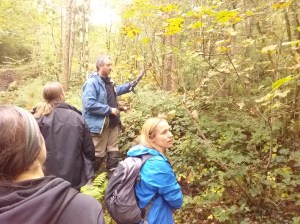
Social Forestry is a fairly new term and is still deliciously being defined, but the gist of it is to get people back in the woods, not only for the wellbeing of the humans but for the wellbeing of the woodland habitat as well.
This latter part is important. Forest schools and bush craft workshops tend to use the woodland as just an outdoor classroom space and the management of the woodland is sometimes not considered. This can lead to woodlands being damaged.
For example, if a group goes into woodland and it has a mix of conifers and young hardwoods such as oak, birch or cherry, the younger, smaller, hardwood poles will be easier for a group to clear. However, in this case, the management plan might be to return the woodland to a mixed deciduous wood and so it would have been more beneficial to remove the larger, albeit more awkward conifers.
On a recent course at the Centre of Alternative Technology Julia Walling and Rob
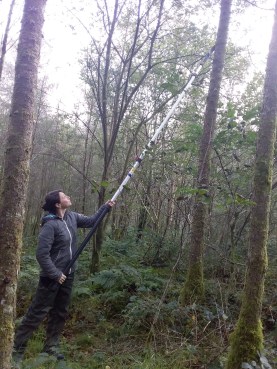
Goodsell ran a Social Forestry course and took us through all the ways we can get people back into the woods, engaging with the environment in a meaningful way while benefiting the woodland itself. Julia focused on the mindful aspects, inviting us to think about what makes us happy, how a woodland environment can fulfil these needs and showed us practical tasks to facilitate mindfulness. Rob took us on a more practical journey through the kinds of tasks groups can do to help manage a woodland, such as scything, trimming branches and clearing bramble.
Of course there is an ultimate practical task that groups can do in the woods – coppicing!
Coppicing has the potential to be used by social forestry groups because it is a practice than can be done with hand tools and no previous experience. It is highly beneficial to the biodiversity of the woodland and so you can enjoy a whole range of positive feelings from doing a good deed as well as spending time in a relaxing environment.
It is a sign perhaps of how chaotic and disconnected society has become from nature that we have to periodically flee to the woods to cope with it. Forest bathing is a way to treat the symptom rather than the cause, but maybe if we’re all feeling little less stressed and a bit more centred we’ll be able to come up with better ideas on how to shape our society in the near future to one that suits our woodland natures better.

