Inner City Life – Inner City Coppice

One of the more romantic thoughts I’ve had over the years is that one day, after all my travels, after all the things I’ve learnt in the world, that I would be able to return to my home and use my new skills to benefit the community in some way.  Its the crux of the hero’s journey.

Most people however, myself included, don’t really fancy moving back home.  Especially when that home is in the middle of a big smelly city with extortionate rent and house prices.  However, because I’m reliant on my home being able to move – I live in a minibus – I periodically find myself back at my childhood abode in North London while my own home is at the garage.

I’m having one of those homecomings this week and in a wonderfully serendipitous way have come across a lovely little coppicing project in a park near to where I grew up.

The park is called The Lordship Rec and is a city haven for humans and non-humans alike.  After a tremendous amount of work and passion from the local people, the Friends Of Lordship Rec managed to get a substantial amount of funding from the National Lottery.  This has allowed them to transform the park from the dilapidated green space of my childhood into a thriving centre of activity with a number of different habitats for wildlife, including a small copse.
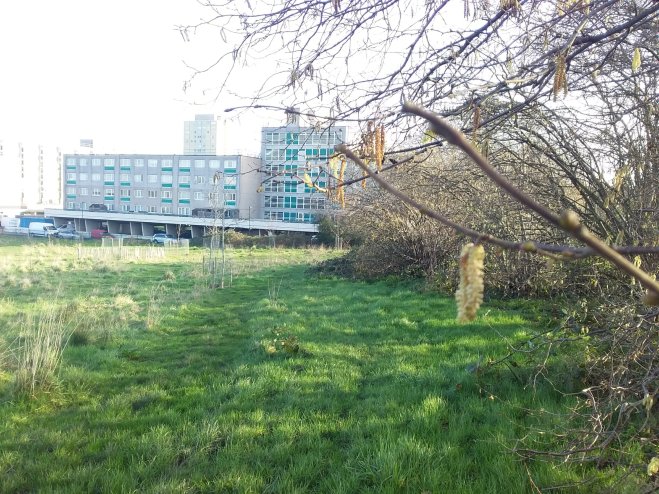
wp-1580918138689336612297.jpg
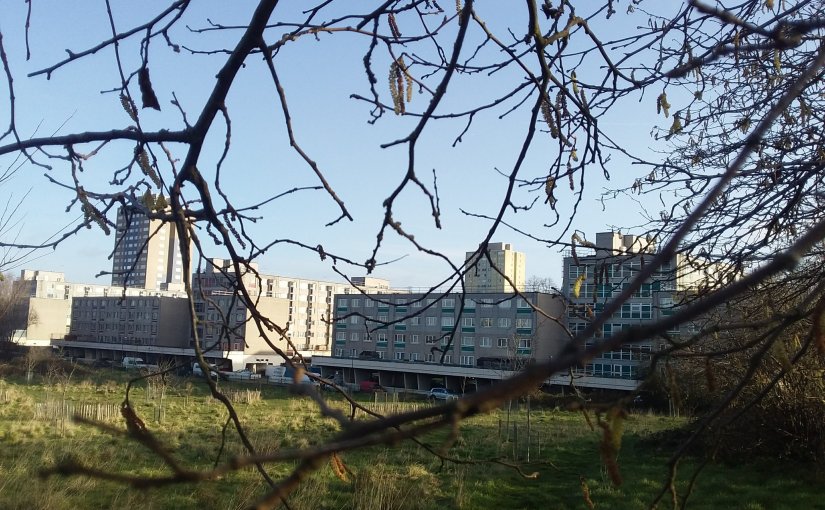
The row of hazel trees with Broad Water Farm Estate in the background

The hazel trees in this ‘copse’ (the name for an area of coppiced trees) look like they were previously a hedge but have not been managed for a decade or two.  This has lead to big bushy trees with dozens of branches and stems crying out to be coppiced.  Although the strip only has about 30-40 tree in it they still offer a chance to demonstrate coppicing to the local community and give them a chance to have a go themselves.

Right next door to the park is the infamous Broad Water Farm that was became known nationwide during the riots in the 1980’s.  Since then money and energy has been invested in the site and with the effort of the Broad Water Farm community and the local council its become an almost crime free area.
wp-1580918138485306080696.jpg
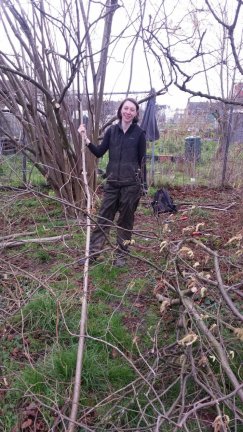
Keeping fit cutting all these 20 year old stems with hand tools

Even so, as with all areas, there are still a number of teenagers knocking about finding entertainment in spraying graffiti and making small fires.  As well as these bored teenagers are a number of residents suffering from the mental health problems that often come with modern city life and who could benefit from spending some time outside.

After speaking with a local housing support officer its clear that there is scope for some interesting woodland projects at the park that could really benefit the community at Broad Water Farm and the surrounding area.  As well as the hazel trees there is also a small woodland that has lots of work to be done.  So this could be a great spot for a little social forestry project.  They also have a cafe with spaces that can be hired out for workshops in a straw bale building.  While its early days for me, and taking groups out on my own is still a bit daunting, this looks like it could a be great future project to get involved in.

In the mean time I’ll be helping to get these lovely hazel trees back into rotation with a volunteer or two and bringing the skill and knowledge of coppicing back home to my local community.


(Note: Special thanks to The Friends of Lordship Rec, especially to Sally Haywell, who is in charge of the orchard in the park, and has been enthusiastic about getting the hazel back into rotation and letting me have a play.)
Getting People Back In The Woods

For many human beings the woods were our natural habitat.  Our ancestors spent thousands, if not millions, of years in this environment and so our senses are designed to cope with the ever changing sights, sounds, temperature and light that we experience in the woods.  Its no wonder we can go a little bit loopy when we’re stuck in the relatively static environment of the office or the school room that contrasts so starkly to our natural habitat.  Our senses don’t have enough to do and the energy is often redirected to mental rumination and stress.

Its not big news that a walk in the woods makes us feel better, but now we have the statistics and evidence to back this intuitive knowing and in Japan a practice called Forest Bathing has taken off and spread across the world.

The removal of clothes is not necessary to forest bathe, although what you do in your private woodland is up to you, instead it is an energetic bath, reducing neurochemicals such as cortisol, reducing heart rate and even effecting people with diabetes in a positive way.

So because of this a number of people are taking the baton and organising workshop and events under the banner of Social Forestry.

20191008_114907
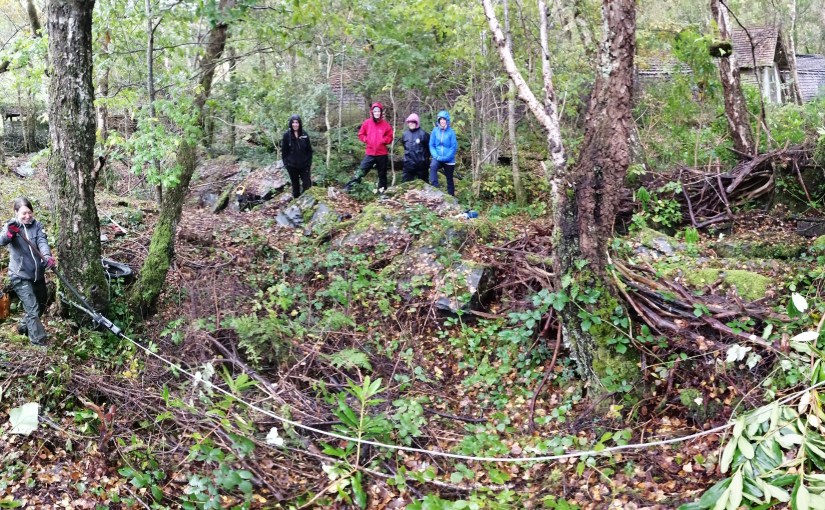
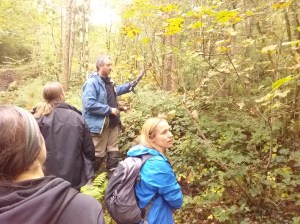
Rob teaching us about woodland management

Social Forestry is a fairly new term and is still deliciously being defined, but the gist of it is to get people back in the woods, not only for the wellbeing of the humans but for the wellbeing of the woodland habitat as well.

This latter part is important.  Forest schools and bush craft workshops tend to use the woodland as just an outdoor classroom space and the management of the woodland is sometimes not considered.  This can lead to woodlands being damaged.

For example,  if a group goes into woodland and it has a mix of conifers and young hardwoods such as oak, birch or cherry, the younger, smaller, hardwood poles will be easier for a group to clear.  However, in this case, the management plan might be to return the woodland to a mixed deciduous wood and so it would have been more beneficial to remove the larger, albeit more awkward conifers.

On a recent course at the Centre of Alternative Technology Julia Walling and Rob

20191009_154023
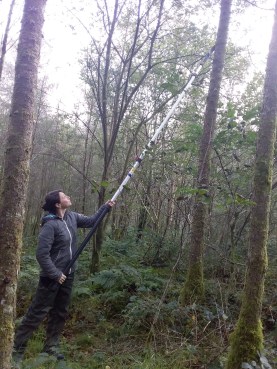
Using a pole saw to trim the bottom of conifers to allow more light into the woods.

Goodsell ran a Social Forestry course and took us through all the ways we can get people back into the woods, engaging with the environment in a meaningful way while benefiting the woodland itself.  Julia focused on the mindful aspects, inviting us to think about what makes us happy, how a woodland environment can fulfil these needs and showed us practical tasks to facilitate mindfulness.  Rob took us on a more practical journey through the kinds of tasks groups can do to help manage a woodland, such as scything, trimming branches and clearing bramble.

Of course there is an ultimate practical task that groups can do in the woods – coppicing!

Coppicing has the potential to be used by social forestry groups because it is a practice than can be done with hand tools and no previous experience.  It is highly beneficial to the biodiversity of the woodland and so you can enjoy a whole range of positive feelings from doing a good deed as well as spending time in a relaxing environment.

It is a sign perhaps of how chaotic and disconnected society has become from nature that we have to periodically flee to the woods to cope with it.  Forest bathing is a way to treat the symptom rather than the cause, but maybe if we’re all feeling little less stressed and a bit more centred we’ll be able to come up with better ideas on how to shape our society in the near future to one that suits our woodland natures better.