Basket Club!

As my apprenticeship comes to a close it is time to start thinking about how I’m going to take my new skills out into the world and make a living.  If you’ve been following this blog then you’ll know that I have a slight basket addiction so it seems proper to use this enthusiam and share it with others.  I’m still learning myself so full blown basketry courses are still a little way off but in the mean time I thought i’d have a go at setting up Basket Club!
basket club

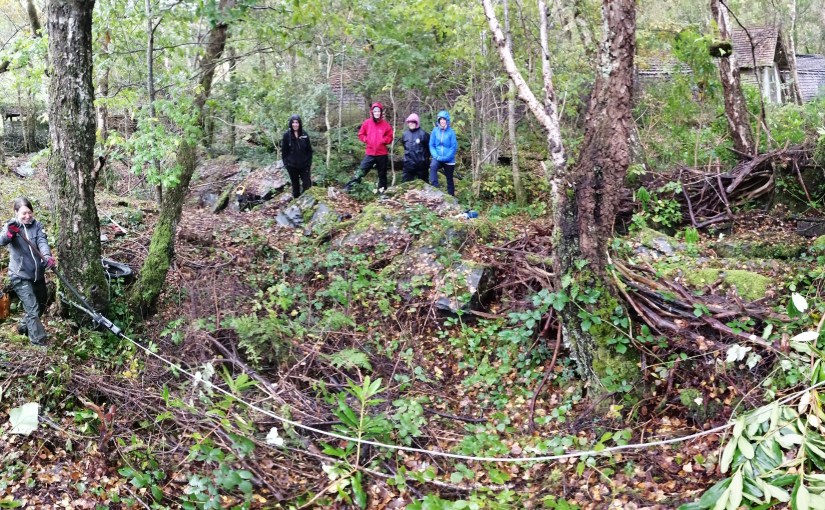
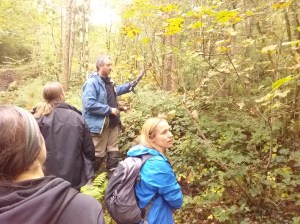
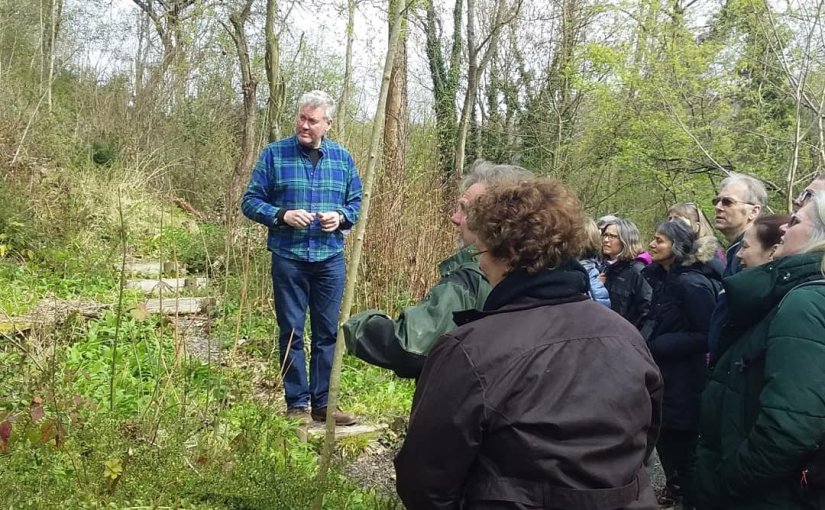
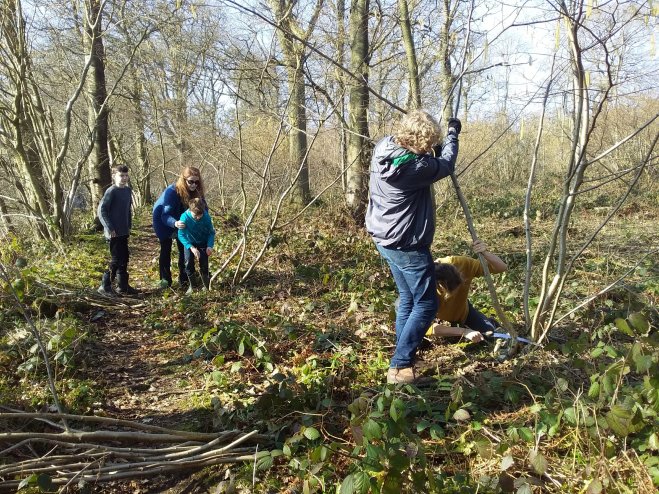
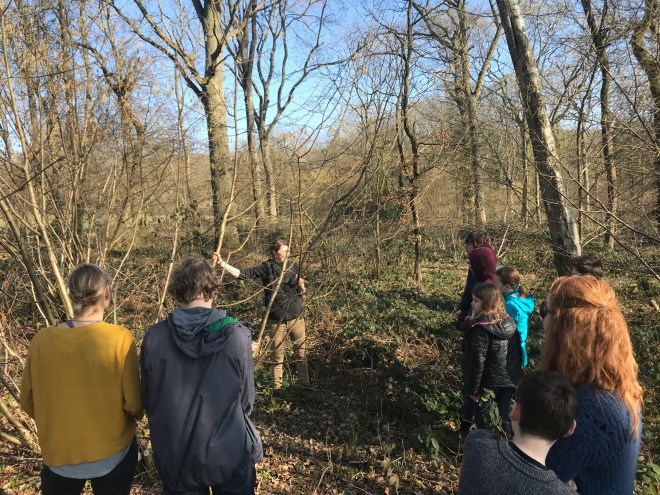
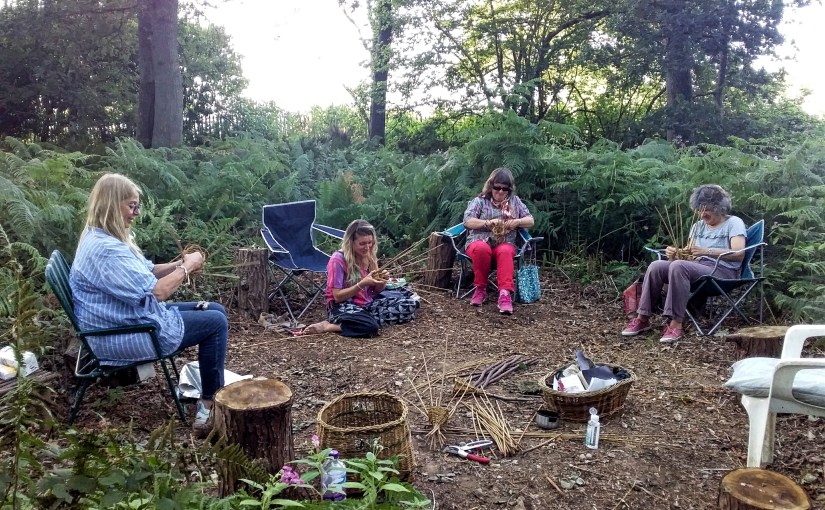
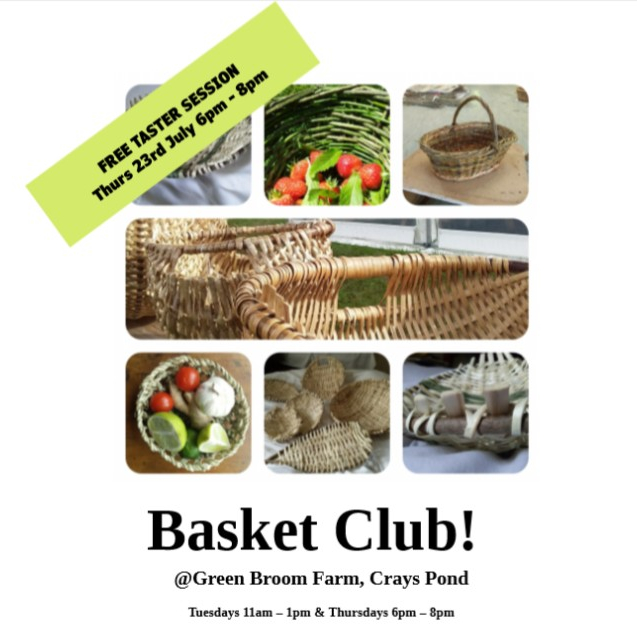
Basket Club! is a weekly 2 hr session where people can drop-in or sign up for a 6 week bundle of sessions.  The idea behind Basket Club! is to invite local people to come and spend some time in the woods, meet their neighbours and have a go at simple weaving projects.

After the isolation of lockdown it feels like the right time to get people back outside and back spending time in groups. Weaving is also a great mindfulness tool to help focus the attention on something other than the concerns of our daily lives.
IMG_9860[10907]


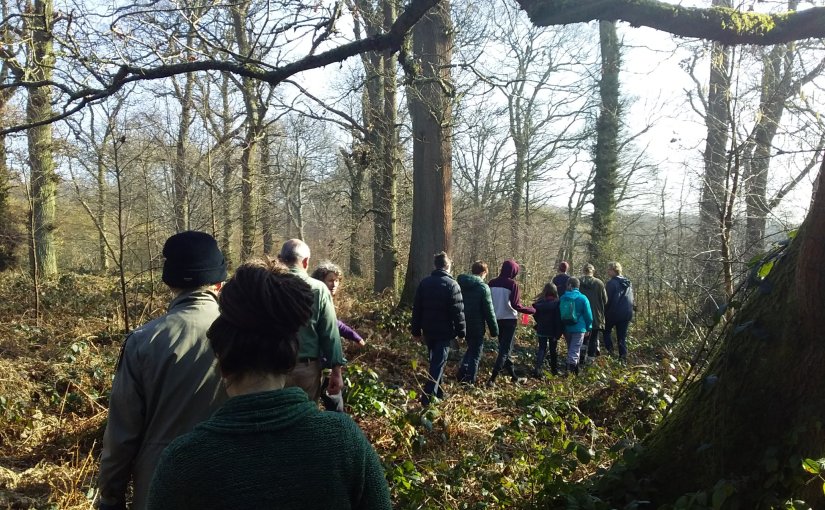
I’m experimenting with how to introduce other mindful practices into the club and so far have been inviting people to choose a sense and focus on that sense as we walk through the woods from the car park to the seating area.  This has helped to calm the group but has also felt a little bit awkward as I have to ask people to be silent on the walk.  I’m aware that people who use chatting as a way to avoid discomfort may find this uncomfortable but I feel its worth persisting as it helps ground everyone in the present moment.

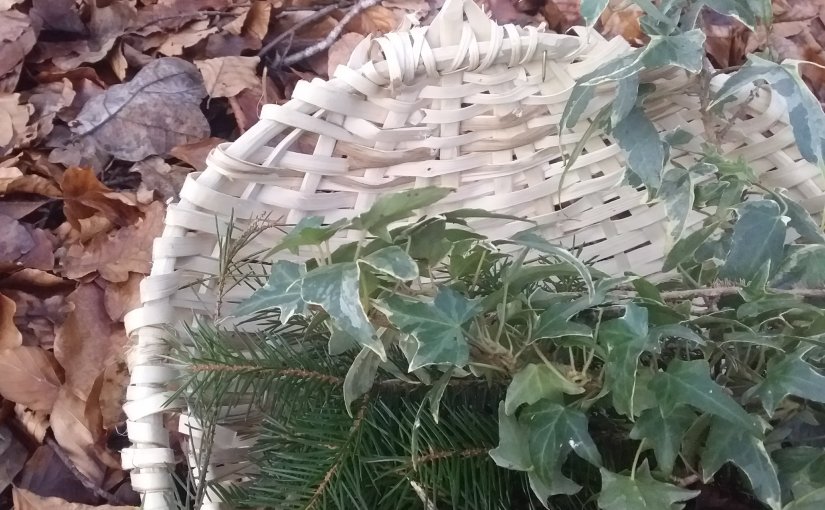
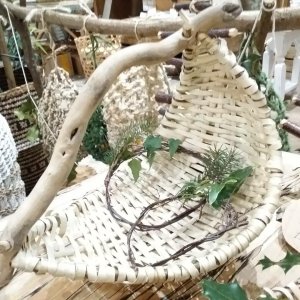
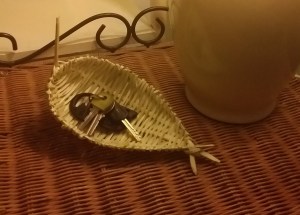
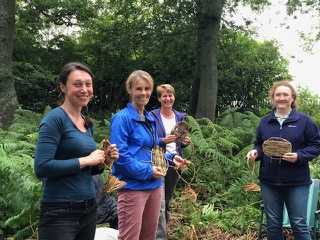
So far we’ve made birdfeeders and soap dishes and also had a go at making a basket baPixlr_20200810140247938se.  The basket base is quite a tricky technique to teach and learn and it is challenging to notice when peoples frustrations come up and not meet them with my own frustration of worrying if i’ve asked too much of them!  Some people however get the techneque easily so it seems that its a case of working out peoples different styles of learning and supplying images as well as words and demonstrations to help people understand what they need to do.  And, for myself, learning to stay calm and patient so I can articulate myself in ways that encourage persistance.
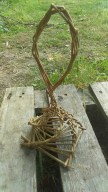
Its all a great learning curve and I’m really pleased with the uptake of participants as I’ve had full classes for each week and you never know, you might find a Basket Club! near you soon too!
What to do with Brash?

It’s been a while since my last post.  You may or may not have noticed, but there was this big virus thing and then the whole world turned upside down for a moment, so its been a bit chaotic recently.  Luckily for me, however, I live on a farm so the time at ‘home’ gave me the chance to really settle onto the land and practice a few new skills.

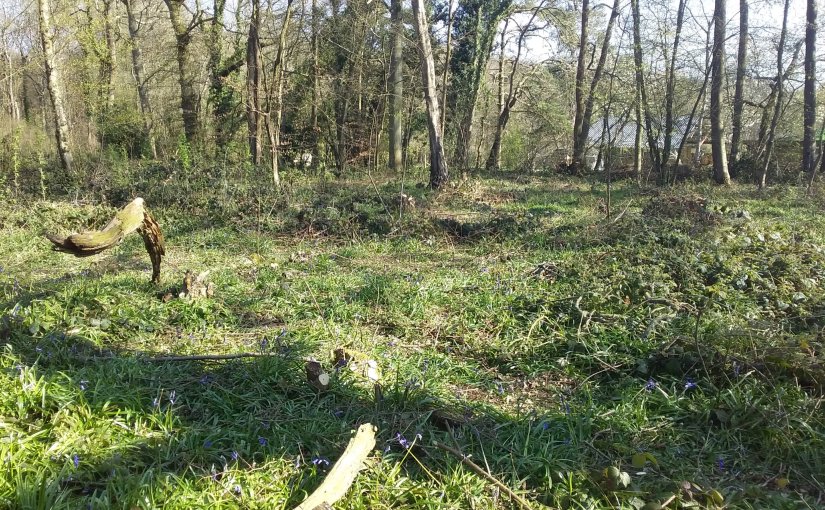
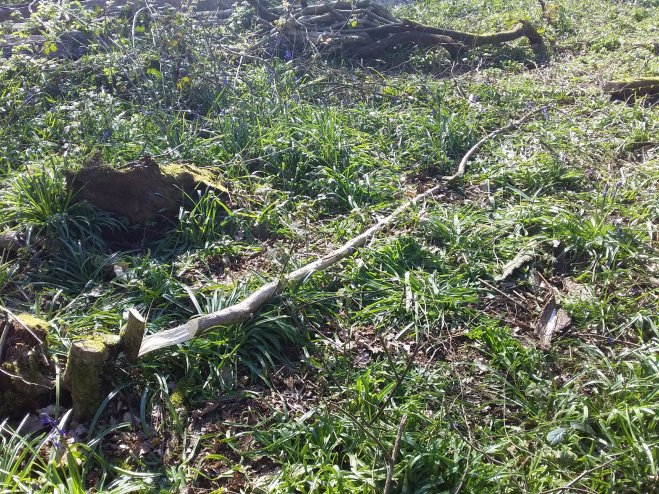
The farm has a small coppice and they have allowed me to work on it for the last two years.  Even though it is heavily overstood (lots of big trees above) there are still some very nice trees to work with.

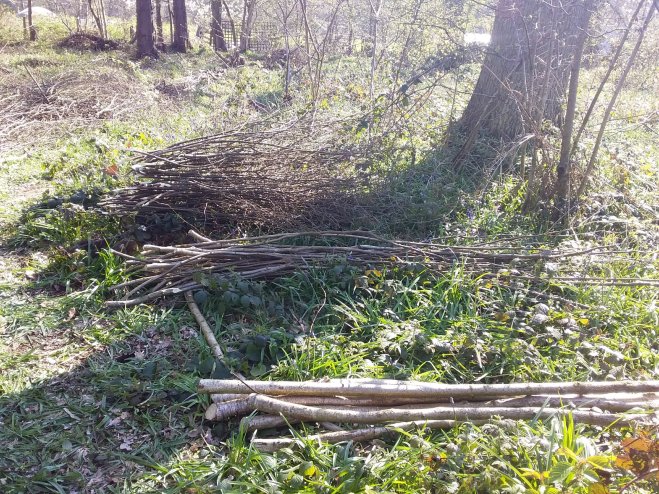
However, because it’s a restoration project we always end up with big piles of brash.

The question of what to do with the brash is usually answered with a chipper or a fire.  However, it has always seemed like a waste of material to me and throughout my apprenticeship I’ve been interested in other uses for it.

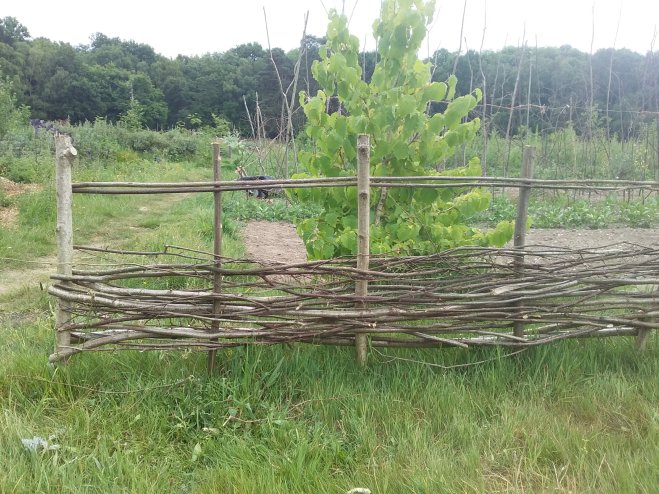
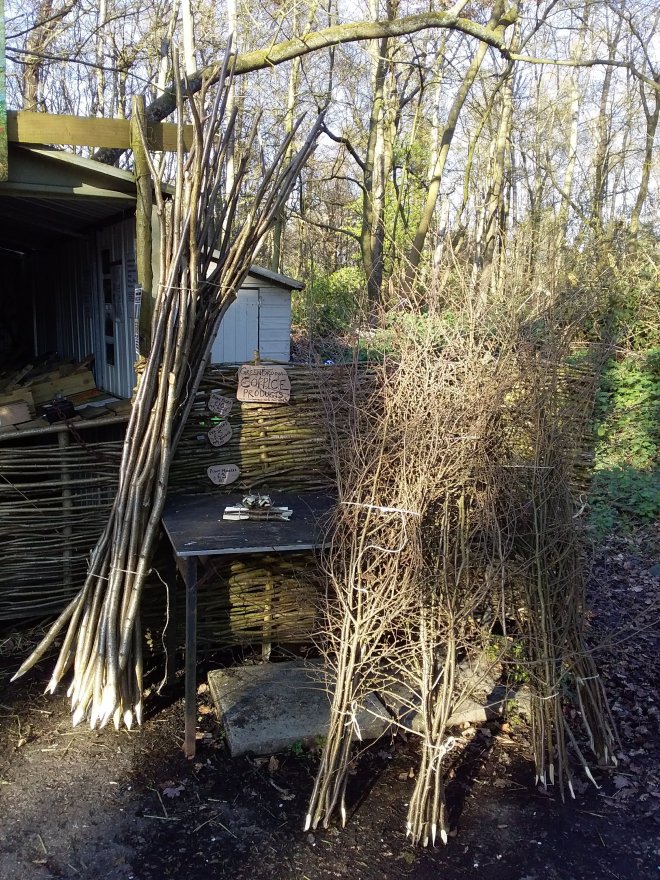
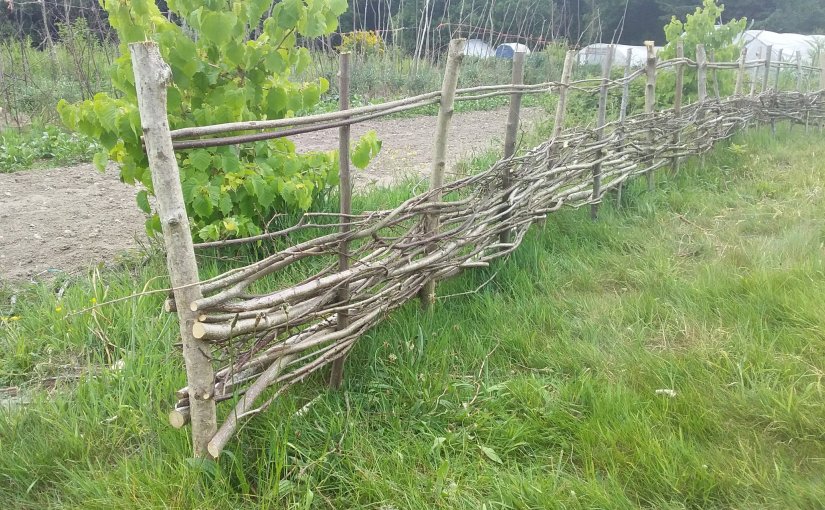
This year I thought I’d have a go at making a ‘rustic’* fence with it.  Many of the branches were not good enough for pea sticks or bean poles but were still straight enough and long enough to be able to weave with once the side branches had been removed.

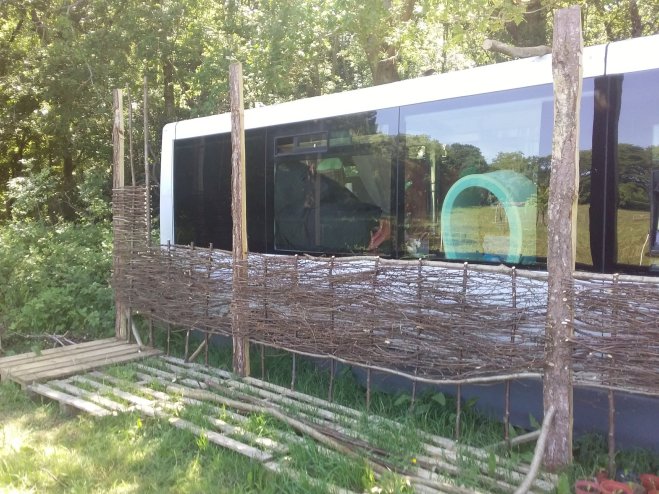
Two fences have been made on the farm over the last two months.  One to seperate the football pitch from the growing beds and one to help my big white bus blend into the background in its new temporary spot on the field.

The first fence needed to be sturdy so I put stakes in the ground, about 4ft long (1ft in the ground) and 1 1/2 feet apart, then screwed in a rail at the bottom to hold them all together.  This rail also holds the weaved material off the ground so that the brambles can be easily cleared around the bottom of the fence.  The long bits were weaved and then the fence was finished with some binder quality lengths to create a top rail design.

wp-1592064704952322716265.jpg

The second fence didn’t need to be as sturdy but did need to cover the white parts of the bus so in this case I used the more brashy ends of the branches to create a thicker screen.  I took two or three branches and squished them so they made an elongated shape and weaved them together, alternating the direction of the weave every two lengths.  This made a lovely bushy screen that still had the delicate dried buds attached, making a lovely design feature.

wp-15920646989951409687528.jpg

I’m very grateful to one of my sponsor businesses, The Stick Smith, for teaching me the basics of willow weaving on a large scale.  We did several garden fences when I was working with Dave and I picked up how to create an even and thick weave and finish off the job nicely with a little pruning.

My next fencing project is for a community project in London where I will be fencing off an area of fruit trees.  If your ever down at the Lordship Rec in North London come and check it out!

*Top Tip: ‘Rustic’ can be applied to anything that looks a bit rough but is charming because of its roughness.

Split Hazel Baskets

Belated happy new year to all!

It’s been a slow start to the year with lots of time needed for resting and recovering from back to back bugs.  But now the end of the month is here I’m back on track and ready to begin the year in earnest.

It’s not all been long naps and lemons and ginger tea, I have also been pottering away and making lots and lots of split hazel baskets.

The technique, historically popular in Wales, was shown to me over the summer and since then I’ve been hooked.  Every part of the process is enjoyable and has a unique set of skills to learn.

wp-1580221008188555527805.jpg

Using a hazel rod to make a basket can be very efficient.  Every part of the stick can be used to make different aspects of the basket such as the frame, the weavers and the ribs, so, apart from a pile of shavings, you’re not left with much waste.  This is handy because suitable hazel rods for basket making are fairly old compared to their willow counterparts, which in my opinion, makes them a much more valuable resource.

wp-1580221008002323208672.jpg
Gathering basket with driftwood handle

The best sticks for making hazel baskets are the slow growing sunshoots that grow on overstood hazel (hazel growing under heavy canopy cover from other trees) and so these can be up to 10 years old even though they are the same width as a 4 year old rod grown in the sunlight.  The thing to remember is that an overstood hazel tree needs its sunshoots, so to protect the tree from damage only one or two rods can be taken from each tree, and only if they have a few others to keep them going.

I’ve been working in miniture mostly so that I can save even more resources.  This often means I can practice making a basket with just one rod.  its more fiddly and takes a bit longer to prepare the material but they turn out well and look cute.  The one issue with selling this kind of things is that because it is smaller customers assume it will be cheaper.  This isn’t the case at all as it takes just as long to make a smaller one because of the fiddliness!

wp-1580221008376629554434.jpg
Having fun with miniture baskets

If you would like to know how to make a basket then I can highly recommend Lewis Goldwater and Zed Outdoors youtube video on how to make a split basket.  It is a mega video at about 4 hours long but well worth a watch and has a timestamp in the description so you can go to a specific part.

Later this year I will be working with Ruth Pybus who is a master split hazel basket maker and also hope to display some of my baskets at the Oxfordshire Basket Makers annual basketry exhibition.


Getting People Back In The Woods

For many human beings the woods were our natural habitat.  Our ancestors spent thousands, if not millions, of years in this environment and so our senses are designed to cope with the ever changing sights, sounds, temperature and light that we experience in the woods.  Its no wonder we can go a little bit loopy when we’re stuck in the relatively static environment of the office or the school room that contrasts so starkly to our natural habitat.  Our senses don’t have enough to do and the energy is often redirected to mental rumination and stress.

Its not big news that a walk in the woods makes us feel better, but now we have the statistics and evidence to back this intuitive knowing and in Japan a practice called Forest Bathing has taken off and spread across the world.

The removal of clothes is not necessary to forest bathe, although what you do in your private woodland is up to you, instead it is an energetic bath, reducing neurochemicals such as cortisol, reducing heart rate and even effecting people with diabetes in a positive way.

So because of this a number of people are taking the baton and organising workshop and events under the banner of Social Forestry.

20191008_114907
Rob teaching us about woodland management

Social Forestry is a fairly new term and is still deliciously being defined, but the gist of it is to get people back in the woods, not only for the wellbeing of the humans but for the wellbeing of the woodland habitat as well.

This latter part is important.  Forest schools and bush craft workshops tend to use the woodland as just an outdoor classroom space and the management of the woodland is sometimes not considered.  This can lead to woodlands being damaged.

For example,  if a group goes into woodland and it has a mix of conifers and young hardwoods such as oak, birch or cherry, the younger, smaller, hardwood poles will be easier for a group to clear.  However, in this case, the management plan might be to return the woodland to a mixed deciduous wood and so it would have been more beneficial to remove the larger, albeit more awkward conifers.

On a recent course at the Centre of Alternative Technology Julia Walling and Rob

20191009_154023
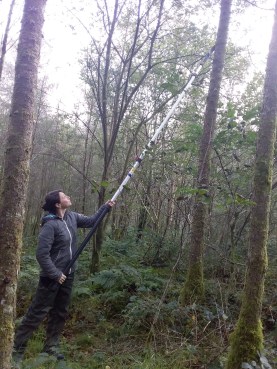
Using a pole saw to trim the bottom of conifers to allow more light into the woods.

Goodsell ran a Social Forestry course and took us through all the ways we can get people back into the woods, engaging with the environment in a meaningful way while benefiting the woodland itself.  Julia focused on the mindful aspects, inviting us to think about what makes us happy, how a woodland environment can fulfil these needs and showed us practical tasks to facilitate mindfulness.  Rob took us on a more practical journey through the kinds of tasks groups can do to help manage a woodland, such as scything, trimming branches and clearing bramble.

Of course there is an ultimate practical task that groups can do in the woods – coppicing!

Coppicing has the potential to be used by social forestry groups because it is a practice than can be done with hand tools and no previous experience.  It is highly beneficial to the biodiversity of the woodland and so you can enjoy a whole range of positive feelings from doing a good deed as well as spending time in a relaxing environment.

It is a sign perhaps of how chaotic and disconnected society has become from nature that we have to periodically flee to the woods to cope with it.  Forest bathing is a way to treat the symptom rather than the cause, but maybe if we’re all feeling little less stressed and a bit more centred we’ll be able to come up with better ideas on how to shape our society in the near future to one that suits our woodland natures better.


Playing with Fire

It’s almost summer so it must be time for charcoal making!  This week I was at Westonbirt Aboretum where Brian Williamson has been restoring their coppice and making, among many other things, charcoal.

20190604_092146
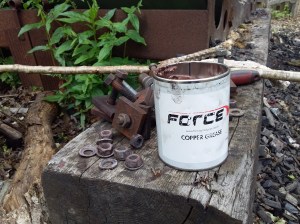
Copper grease is used on the bolts as normal grease would burn away at high temperatures.

Charcoal making has this air of romance.  I don’t know if its the plumes of smoke – that is actually mostly moisture – the site of people covered in black dust or the anticipation and skill in actually cooking the wood and not burning it all… or leaving it half baked, but it harks back to something earthy and oldy worldy.

In those olden days people would use earth mounds to cook their wood and this can still be seen at events such as Char Fest, which is hopefully being held again this year for new enthusisasts such as myself.  Up until recently the ring kiln was the charcoal makers tool of choice.  This involved lighting a fire inside the kiln and adjusting chimneys and vents to control the air flow and temperature.  It also involved climbing in the kiln to shovel out the charcoal… which, I am told, is a very messy job indeed!

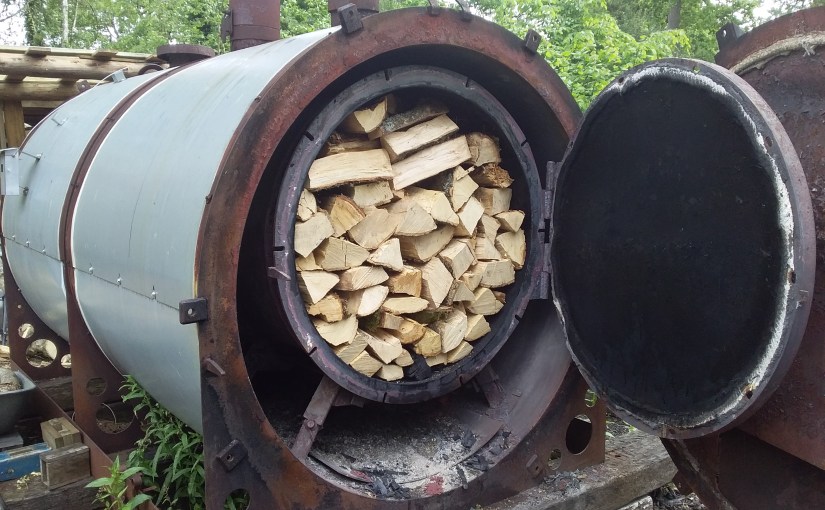
These days we have a marvellous instrument called a retort.  Not only does it have an almost 100% converstion rate, (we only had two or three ‘brown ends’ – the name of undercooked wood – out of the entire burn) it also resuses the gases expelled by the wood as it cooks.  A fire is needed to start the whole thing off but when it reaches 420 celcius the retort will use the methane gas from the cooking wood and it becomes self-perpetuating until the gas has been used up.  And you don’t have to climb in the thing to get all the charcoal out.

20190604_165744
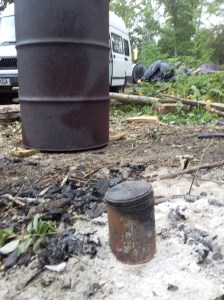
A tin can, an oil drum and a retort (you can just see the flame in the background)

I didn’t get a chance to try out the ring kiln but I did see how a retort, an oil drum and even a tin can will turn wood into charcoal and I’m looking forward to practicing the latter two when I get home.


“Why use charcoal?” I asked, hoping I wasn’t about to shoot myself in the business foot.  But Brian gave some good answers… charcoal burns at a hotter temperature, turns into embers quickly and has no smoke.  The charcoal that is made by local woodland and coppice workers also has the added benefit of being additive free, has reduced transport miles and of course it supports us woodland folk to support our woodlands.  Sounds good to me!


My First Coup

Well, the bluebells are out in force, the leaves are bursting into life and I am exhausted. So it must be spring! With my first coup nearly finished and ready to enjoy all the lovely sunlight it can now receive I am ready to settle down into making and selling mode.

20190411_1544021228047303.jpg
piles of products

I’ve been really lucky to have three woods to work in this winter and each have offered a different experience. Iain Loasby showed me how the professionals do it – well finish it, because I actually missed the cutting part – and then I got the chance to work in a fairly productive woodland in Worcester filling real life orders for real life clients. Finally I was able to put my heart and soul into a little coup in South Oxfordshire where I have been given to chance to practice everything I’ve learnt.

It was a very small and very over-stood so was more of a restoration project rather than a fully functioning coppice. Even so, there has been a chance to sell a few products and have already sold some bean poles in the farm shop. I also have plenty of pea-sticks if anyone is interested!

20190411_154338344759072.jpg
Bit of layering

The hazel is quite sparse in this coup so I’ve layered some of the trees. This will hopefully increase the density for the next cut. I’ve also left small piles of wood to rot down and turn into habitats for the local small mammal population. The chickens also seem to like to use the brash piles as secret laying spots.

20190411_1543581942900739.jpg

All the material has been put into a hedge around the coup so that over the next year, once the material starts to dry out, we can use it for firewood and kindle, as well as making pretty fences and other various crafty things.

I’m shattered but its been great fun and now I get to think about what I will make!

20190410_175544310193850.jpg

An Introduction to Woodland Management

I had a chance this weekend to really get my teeth into woodland management.  After spending a lot of time in the woods over the winter and taking part in coppicing, felling trees and watching tree surgeons top and lop, I was excited to be able to correlate some of my practical experience with the management side of things.

img_20190407_204644_4571976738240.jpg
A lovely old lime tree joins the circle

The workshop was led by Jim Waterson, who has managing woodlands for many years and now teaches other newbies like me.

Of course, my main interest is the coppice aspect of woodland management, but it was also interesting to learn about what is called High Forest – the trees that you don’t coppice.

Making a woodland management plan involves quite a few considerations.  These are short-term and long-term considerations, often thinking beyond your own lifetime.  A plan also needs to be clear and easy to understand so that who ever inherits the plan can understand what you were on about and what your vision for the woodland was.

A big consideration at this time is climate change/chaos.  We are in a period of unpredictable weather that could adversely effect our native woodland species.  With the prediction of rising temperatures and water levels we need to be thinking about what tree species are going to thrive best in this environment.  Some species of french oak might fair better in hotter climes and species such as lime and sycamore might be more hardy in hotter weather.  (Ideally, we’d be holding the industries responsible for climate chaos accountable and not needing to apply any damage control – but there you go.)

img_20190407_204644_461107305629.jpg
wood anemone

Pests and diseases are also on the up. This is due mostly to imports but is compounded by climate chaos which stresses the trees, leaving them more susceptible to attacks.

Management of a woodland comes with a fair amount of responsibility, especially if one has public paths.  However, even if you don’t have the public wandering through your woods you are still liable for taking measures to ensure that the woodland is well-managed and that any dangerous branch or tree is dealt with.  Public liability insurance is a good idea.

When it comes to the legal side of things most small woodland owners won’t need a felling licence.  One is allowed to fell up to 5 cubic metres per quarter and if you’ve just bought a 6 acre woodland.co.uk property you could probably cut your entire woodland down in a year with that (please don’t).  Some types of felling are also exempt and coppicing trees under 150mm comes under this, which is handy.  But make sure you check with your local tree officer before undertaking any work.  Any trees cut down that are in a designated area and require a license or have a Tree Preservation Order could leave you in court.

If you are interested in taking one of these courses then get in touch with the Small Woods Association or do a quick search online and look out for Jim Waterson.


A Nice Day Out

One of my passions in life is getting people back into the woods.  It is so important, not only to encourage people to spend time out side, and away from cities, but also to get people working outside.

As a consumer culture we often experience the woods as just another nice day out.  But this kind of relationship can create a sense of seperation from our enviroment and bring on feelings of detachment.  We become outsiders peering into an alien landscape meant for other living things that we call ‘nature’.  What we seem to have forgotten however, is that we are part of that natural environment!  Before the onset of agriculture, and more recently indistrial civilisation, the woodland was our home for thousands, if not millions of years.  But fear not.  This sense of oneness returns when one engages directly with the woodland environment through hard graft.  The primal instinct and ancient connection reemerges.

20190223_121625967898869.jpg

With this all in mind it was an absolute delight to put on my first community coppicing event.  For one unusually sunny February day 14 people had a chance to get their hands dirty and bring light and warmth back to the woodland floor, as has been done so previously for centuries.

Even better was the attendence of a local scout troop!  In the era of ipads and social media it was encouraging to see the focus and enthusiam of these children as they engaged directly with the work.  They loved it so much they were keen to know when they could come back again!  And, with the help of the other adults, all children left with complete sets of fingers, which I was very pleased about indeed.

20190223_1127251056308894.jpg

Coppicing is a perfect way to get people back into the woodlands and learning how important it is to manage this type ecosystem.  A coppice expects to be cut, and the more we leave them to overgrow the more, ironically, we damage the environment.  A coppice also lends itself well to volunteer work because of the simplicity of the work and the tools that are used.  Anyone who can use a pruning saw and some loppers can get involved.  And the more we get people involved the more we can send out the message that we have a great solution to managing our woodlands in a sustainable way and providing our communities with amazing, high quality wood based products.

IMG_7429


The Journey Starts Here…

“The tree which moves some to tears of joy is in the eyes of others only a green thing that stands in the way. Some see nature all ridicule and deformity… and some scarce see nature at all. But to the eyes of the man of imagination, nature is imagination itself.”

– William Blake

“A sure cure for seasickness is to sit under a tree.”

– Spike Milligan

Hello! My name is Suz and I am a coppicer.  Well…  not quite yet.  But I was lucky enough to be chosen to be part of the National Coppice Apprenticeship Scheme, which is a partnership between Small Woods and the Bill Hogarth MBE Memorial Apprenticeship Trust and funded by The Ernest Cook Trust –  you can read more about that here.

This blog is a diary of my journey from London based care worker to fully fledged woman of the woods.  It will document the lifestyle of a modern day coppicer and all the techniques and tools that are involved.  This is such a great sustainable industry so it’s an honour to be part of the resurgence of the coppicing community.  I hope you enjoy this journey with me!

Suz x


P.S. Please feel free to correct me on any errors I’ve made in the comment sections below the offending post.  This is a learning diary and any corrections will be greatly appreciated and will hopefully help others as well.

P.P.S.  Please subscribe and pass on to anyone who you think will find this interesting. Cheers!