Basket Club!

As my apprenticeship comes to a close it is time to start thinking about how I’m going to take my new skills out into the world and make a living.  If you’ve been following this blog then you’ll know that I have a slight basket addiction so it seems proper to use this enthusiam and share it with others.  I’m still learning myself so full blown basketry courses are still a little way off but in the mean time I thought i’d have a go at setting up Basket Club!
basket club

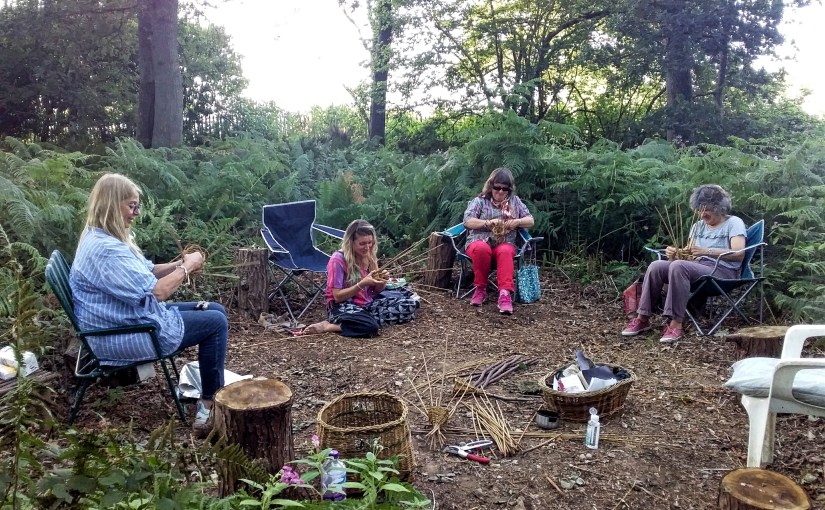
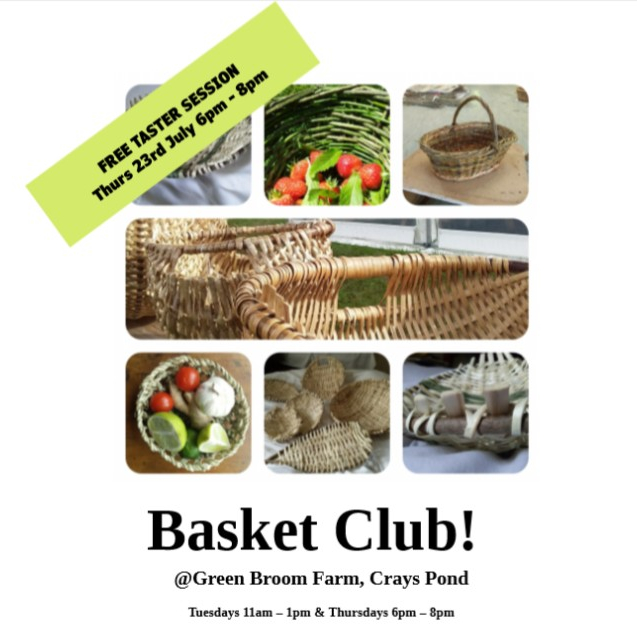
Basket Club! is a weekly 2 hr session where people can drop-in or sign up for a 6 week bundle of sessions.  The idea behind Basket Club! is to invite local people to come and spend some time in the woods, meet their neighbours and have a go at simple weaving projects.

After the isolation of lockdown it feels like the right time to get people back outside and back spending time in groups. Weaving is also a great mindfulness tool to help focus the attention on something other than the concerns of our daily lives.
IMG_9860[10907]


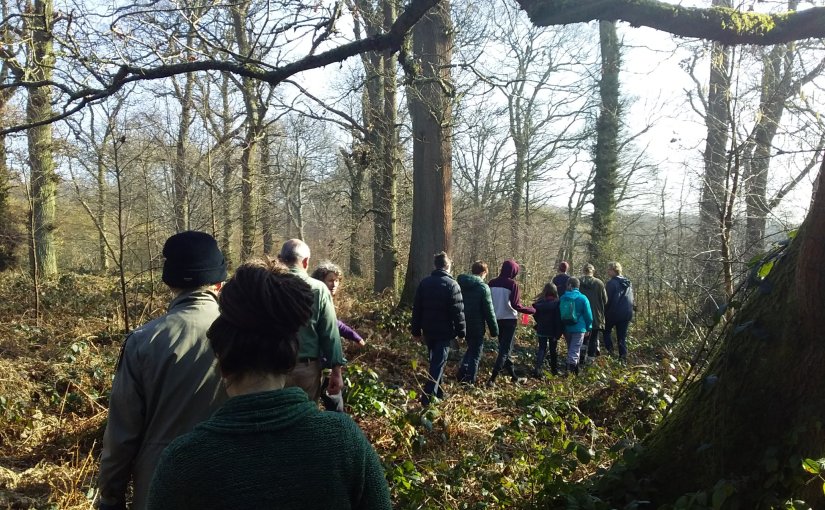
I’m experimenting with how to introduce other mindful practices into the club and so far have been inviting people to choose a sense and focus on that sense as we walk through the woods from the car park to the seating area.  This has helped to calm the group but has also felt a little bit awkward as I have to ask people to be silent on the walk.  I’m aware that people who use chatting as a way to avoid discomfort may find this uncomfortable but I feel its worth persisting as it helps ground everyone in the present moment.

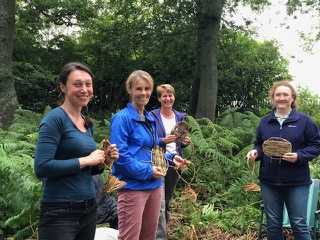
So far we’ve made birdfeeders and soap dishes and also had a go at making a basket baPixlr_20200810140247938se.  The basket base is quite a tricky technique to teach and learn and it is challenging to notice when peoples frustrations come up and not meet them with my own frustration of worrying if i’ve asked too much of them!  Some people however get the techneque easily so it seems that its a case of working out peoples different styles of learning and supplying images as well as words and demonstrations to help people understand what they need to do.  And, for myself, learning to stay calm and patient so I can articulate myself in ways that encourage persistance.
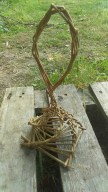
Its all a great learning curve and I’m really pleased with the uptake of participants as I’ve had full classes for each week and you never know, you might find a Basket Club! near you soon too!
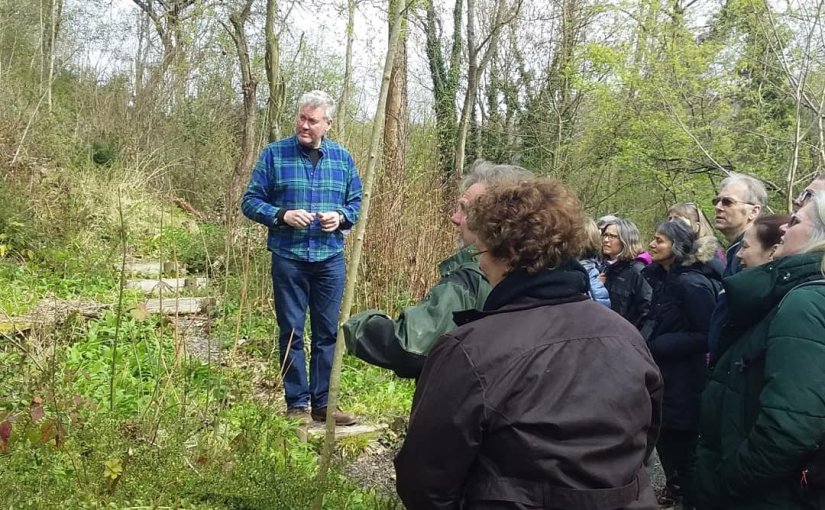
An Introduction to Woodland Management

I had a chance this weekend to really get my teeth into woodland management.  After spending a lot of time in the woods over the winter and taking part in coppicing, felling trees and watching tree surgeons top and lop, I was excited to be able to correlate some of my practical experience with the management side of things.

img_20190407_204644_4571976738240.jpg
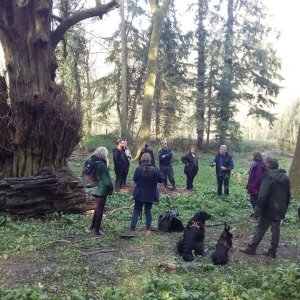
A lovely old lime tree joins the circle

The workshop was led by Jim Waterson, who has managing woodlands for many years and now teaches other newbies like me.

Of course, my main interest is the coppice aspect of woodland management, but it was also interesting to learn about what is called High Forest – the trees that you don’t coppice.

Making a woodland management plan involves quite a few considerations.  These are short-term and long-term considerations, often thinking beyond your own lifetime.  A plan also needs to be clear and easy to understand so that who ever inherits the plan can understand what you were on about and what your vision for the woodland was.

A big consideration at this time is climate change/chaos.  We are in a period of unpredictable weather that could adversely effect our native woodland species.  With the prediction of rising temperatures and water levels we need to be thinking about what tree species are going to thrive best in this environment.  Some species of french oak might fair better in hotter climes and species such as lime and sycamore might be more hardy in hotter weather.  (Ideally, we’d be holding the industries responsible for climate chaos accountable and not needing to apply any damage control – but there you go.)

img_20190407_204644_461107305629.jpg
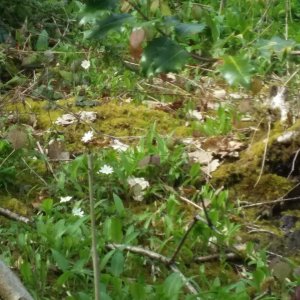
wood anemone

Pests and diseases are also on the up. This is due mostly to imports but is compounded by climate chaos which stresses the trees, leaving them more susceptible to attacks.

Management of a woodland comes with a fair amount of responsibility, especially if one has public paths.  However, even if you don’t have the public wandering through your woods you are still liable for taking measures to ensure that the woodland is well-managed and that any dangerous branch or tree is dealt with.  Public liability insurance is a good idea.

When it comes to the legal side of things most small woodland owners won’t need a felling licence.  One is allowed to fell up to 5 cubic metres per quarter and if you’ve just bought a 6 acre woodland.co.uk property you could probably cut your entire woodland down in a year with that (please don’t).  Some types of felling are also exempt and coppicing trees under 150mm comes under this, which is handy.  But make sure you check with your local tree officer before undertaking any work.  Any trees cut down that are in a designated area and require a license or have a Tree Preservation Order could leave you in court.

If you are interested in taking one of these courses then get in touch with the Small Woods Association or do a quick search online and look out for Jim Waterson.


A Nice Day Out

One of my passions in life is getting people back into the woods.  It is so important, not only to encourage people to spend time out side, and away from cities, but also to get people working outside.

As a consumer culture we often experience the woods as just another nice day out.  But this kind of relationship can create a sense of seperation from our enviroment and bring on feelings of detachment.  We become outsiders peering into an alien landscape meant for other living things that we call ‘nature’.  What we seem to have forgotten however, is that we are part of that natural environment!  Before the onset of agriculture, and more recently indistrial civilisation, the woodland was our home for thousands, if not millions of years.  But fear not.  This sense of oneness returns when one engages directly with the woodland environment through hard graft.  The primal instinct and ancient connection reemerges.

20190223_121625967898869.jpg

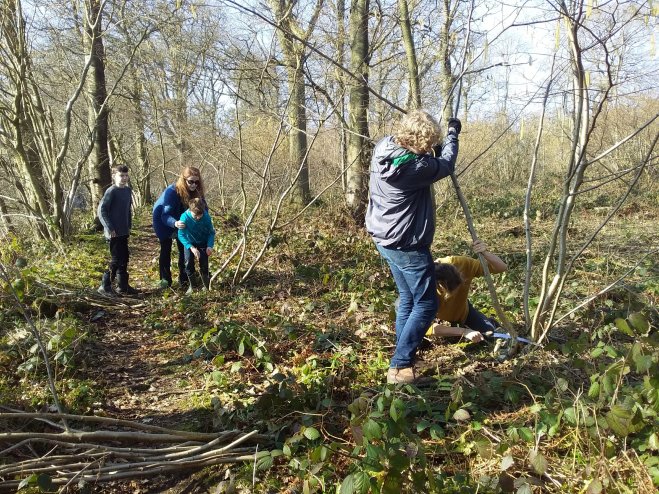
With this all in mind it was an absolute delight to put on my first community coppicing event.  For one unusually sunny February day 14 people had a chance to get their hands dirty and bring light and warmth back to the woodland floor, as has been done so previously for centuries.

Even better was the attendence of a local scout troop!  In the era of ipads and social media it was encouraging to see the focus and enthusiam of these children as they engaged directly with the work.  They loved it so much they were keen to know when they could come back again!  And, with the help of the other adults, all children left with complete sets of fingers, which I was very pleased about indeed.

20190223_1127251056308894.jpg

Coppicing is a perfect way to get people back into the woodlands and learning how important it is to manage this type ecosystem.  A coppice expects to be cut, and the more we leave them to overgrow the more, ironically, we damage the environment.  A coppice also lends itself well to volunteer work because of the simplicity of the work and the tools that are used.  Anyone who can use a pruning saw and some loppers can get involved.  And the more we get people involved the more we can send out the message that we have a great solution to managing our woodlands in a sustainable way and providing our communities with amazing, high quality wood based products.

IMG_7429