Basket Club!

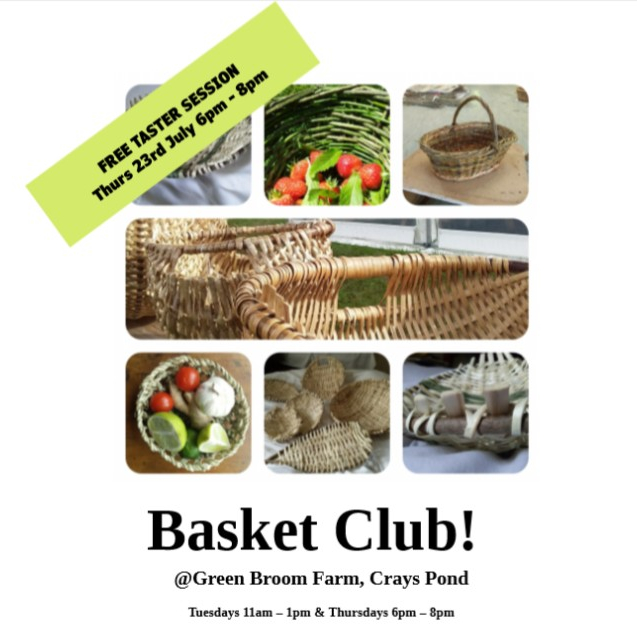
As my apprenticeship comes to a close it is time to start thinking about how I’m going to take my new skills out into the world and make a living.  If you’ve been following this blog then you’ll know that I have a slight basket addiction so it seems proper to use this enthusiam and share it with others.  I’m still learning myself so full blown basketry courses are still a little way off but in the mean time I thought i’d have a go at setting up Basket Club!
basket club

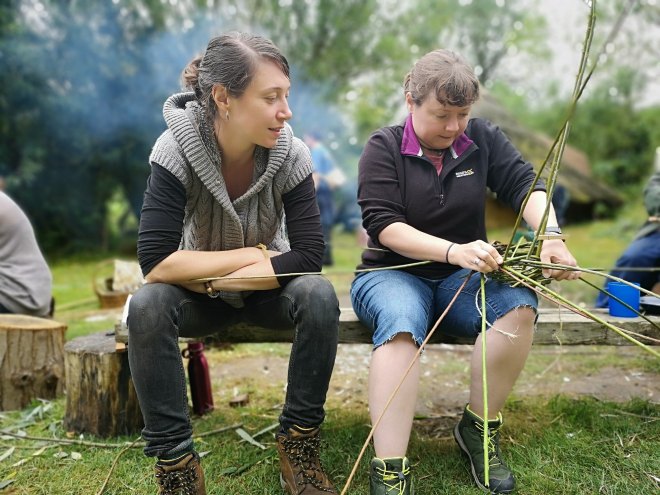
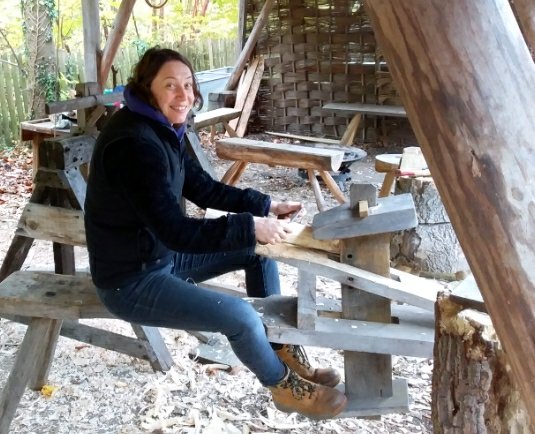
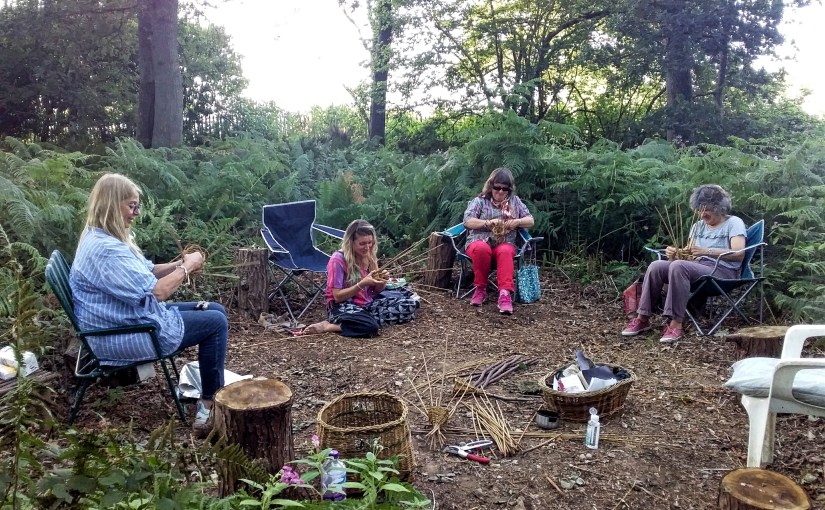
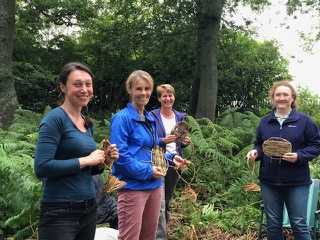
Basket Club! is a weekly 2 hr session where people can drop-in or sign up for a 6 week bundle of sessions.  The idea behind Basket Club! is to invite local people to come and spend some time in the woods, meet their neighbours and have a go at simple weaving projects.

After the isolation of lockdown it feels like the right time to get people back outside and back spending time in groups. Weaving is also a great mindfulness tool to help focus the attention on something other than the concerns of our daily lives.
IMG_9860[10907]


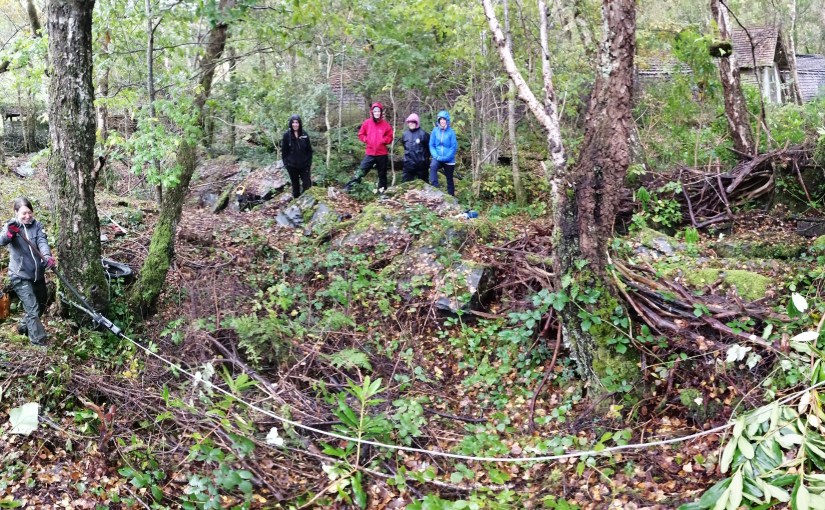
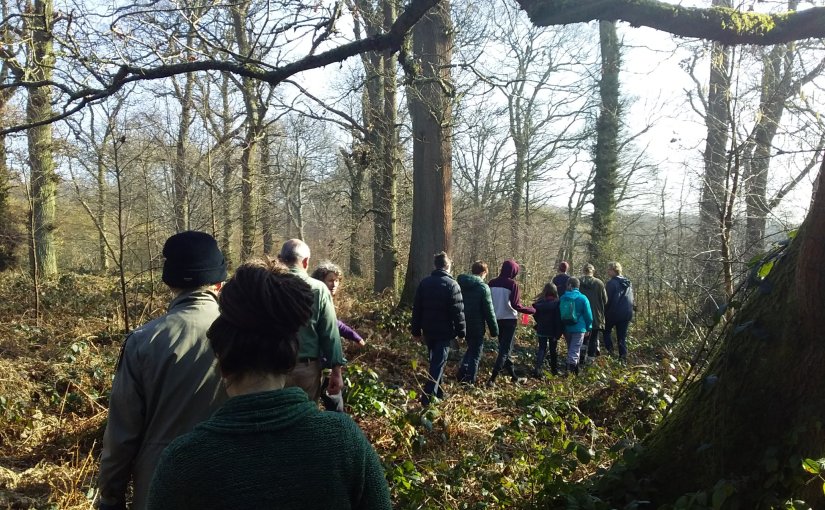
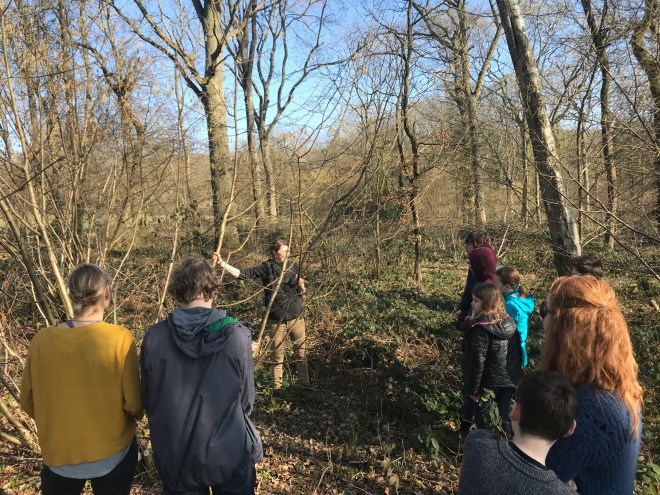
I’m experimenting with how to introduce other mindful practices into the club and so far have been inviting people to choose a sense and focus on that sense as we walk through the woods from the car park to the seating area.  This has helped to calm the group but has also felt a little bit awkward as I have to ask people to be silent on the walk.  I’m aware that people who use chatting as a way to avoid discomfort may find this uncomfortable but I feel its worth persisting as it helps ground everyone in the present moment.

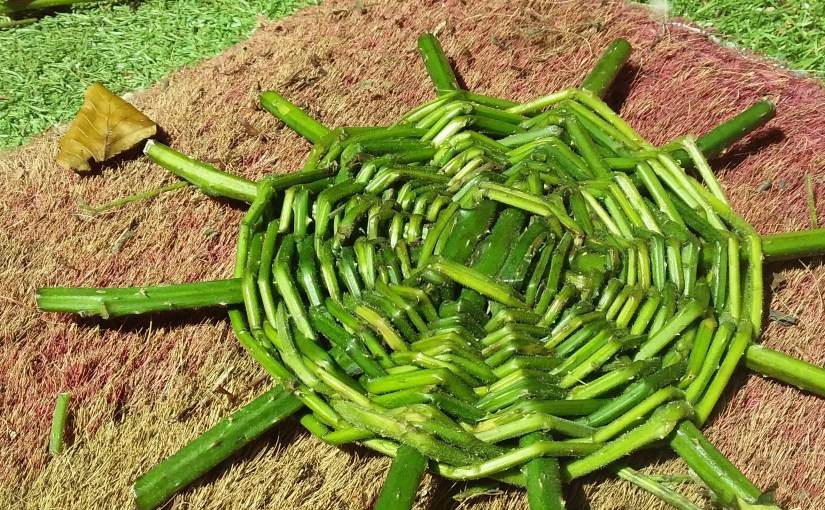
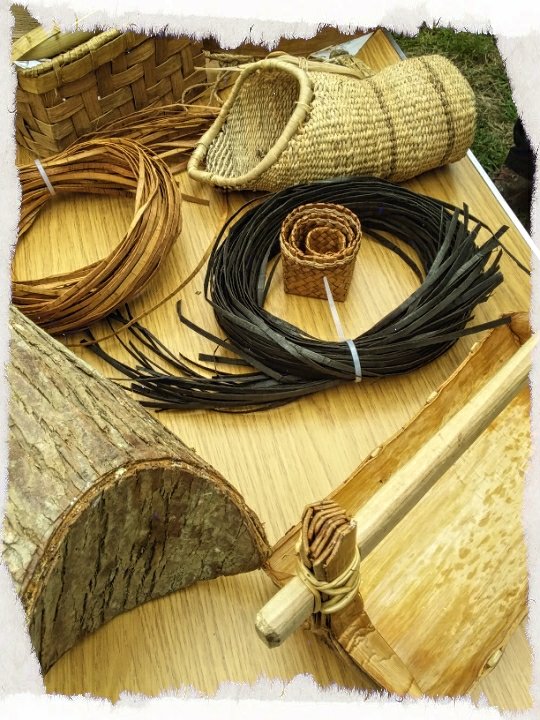
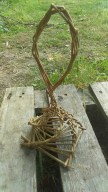
So far we’ve made birdfeeders and soap dishes and also had a go at making a basket baPixlr_20200810140247938se.  The basket base is quite a tricky technique to teach and learn and it is challenging to notice when peoples frustrations come up and not meet them with my own frustration of worrying if i’ve asked too much of them!  Some people however get the techneque easily so it seems that its a case of working out peoples different styles of learning and supplying images as well as words and demonstrations to help people understand what they need to do.  And, for myself, learning to stay calm and patient so I can articulate myself in ways that encourage persistance.
Its all a great learning curve and I’m really pleased with the uptake of participants as I’ve had full classes for each week and you never know, you might find a Basket Club! near you soon too!
What to do with Brash?

It’s been a while since my last post.  You may or may not have noticed, but there was this big virus thing and then the whole world turned upside down for a moment, so its been a bit chaotic recently.  Luckily for me, however, I live on a farm so the time at ‘home’ gave me the chance to really settle onto the land and practice a few new skills.

The farm has a small coppice and they have allowed me to work on it for the last two years.  Even though it is heavily overstood (lots of big trees above) there are still some very nice trees to work with.

However, because it’s a restoration project we always end up with big piles of brash.

The question of what to do with the brash is usually answered with a chipper or a fire.  However, it has always seemed like a waste of material to me and throughout my apprenticeship I’ve been interested in other uses for it.

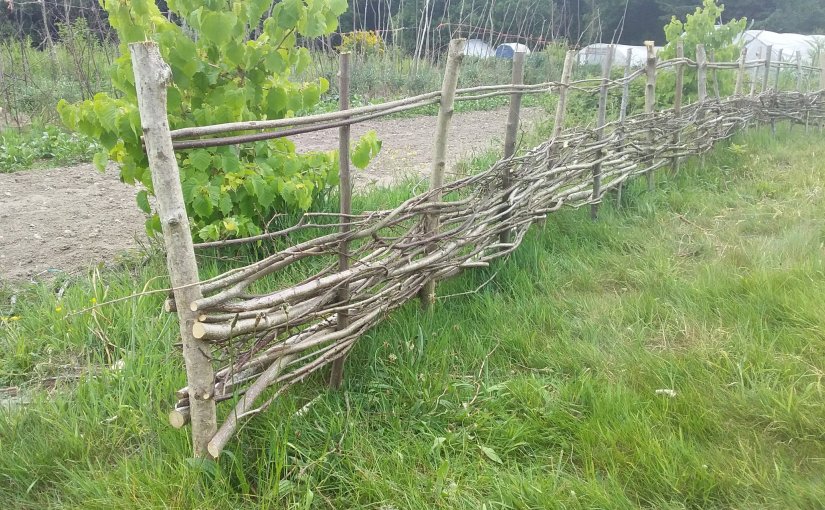
This year I thought I’d have a go at making a ‘rustic’* fence with it.  Many of the branches were not good enough for pea sticks or bean poles but were still straight enough and long enough to be able to weave with once the side branches had been removed.

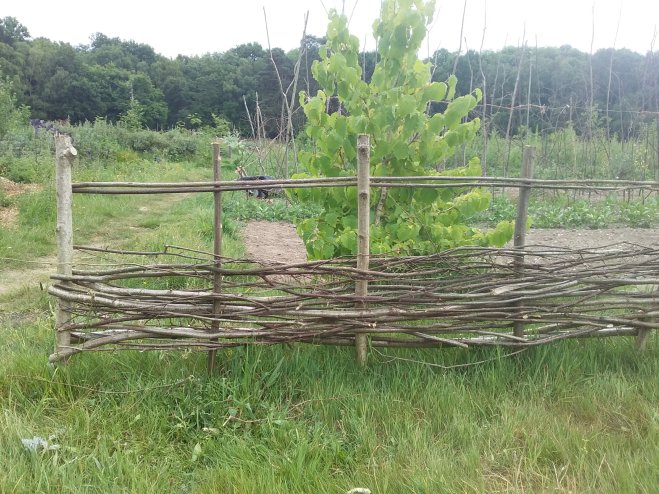
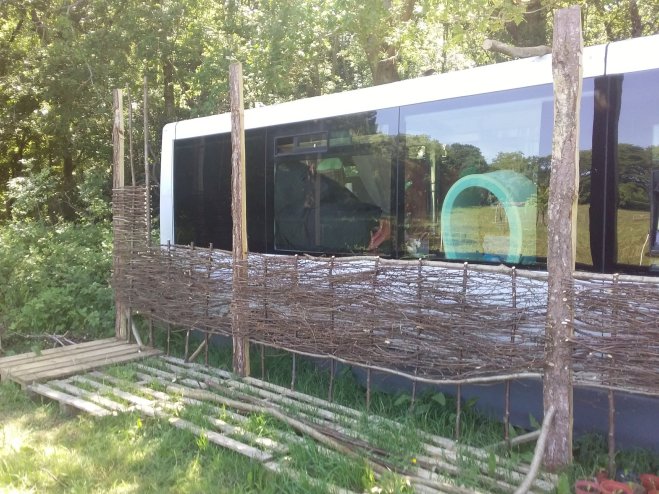
Two fences have been made on the farm over the last two months.  One to seperate the football pitch from the growing beds and one to help my big white bus blend into the background in its new temporary spot on the field.

The first fence needed to be sturdy so I put stakes in the ground, about 4ft long (1ft in the ground) and 1 1/2 feet apart, then screwed in a rail at the bottom to hold them all together.  This rail also holds the weaved material off the ground so that the brambles can be easily cleared around the bottom of the fence.  The long bits were weaved and then the fence was finished with some binder quality lengths to create a top rail design.

wp-1592064704952322716265.jpg

The second fence didn’t need to be as sturdy but did need to cover the white parts of the bus so in this case I used the more brashy ends of the branches to create a thicker screen.  I took two or three branches and squished them so they made an elongated shape and weaved them together, alternating the direction of the weave every two lengths.  This made a lovely bushy screen that still had the delicate dried buds attached, making a lovely design feature.

wp-15920646989951409687528.jpg

I’m very grateful to one of my sponsor businesses, The Stick Smith, for teaching me the basics of willow weaving on a large scale.  We did several garden fences when I was working with Dave and I picked up how to create an even and thick weave and finish off the job nicely with a little pruning.

My next fencing project is for a community project in London where I will be fencing off an area of fruit trees.  If your ever down at the Lordship Rec in North London come and check it out!

*Top Tip: ‘Rustic’ can be applied to anything that looks a bit rough but is charming because of its roughness.

Inner City Life – Inner City Coppice

One of the more romantic thoughts I’ve had over the years is that one day, after all my travels, after all the things I’ve learnt in the world, that I would be able to return to my home and use my new skills to benefit the community in some way.  Its the crux of the hero’s journey.

Most people however, myself included, don’t really fancy moving back home.  Especially when that home is in the middle of a big smelly city with extortionate rent and house prices.  However, because I’m reliant on my home being able to move – I live in a minibus – I periodically find myself back at my childhood abode in North London while my own home is at the garage.

I’m having one of those homecomings this week and in a wonderfully serendipitous way have come across a lovely little coppicing project in a park near to where I grew up.

The park is called The Lordship Rec and is a city haven for humans and non-humans alike.  After a tremendous amount of work and passion from the local people, the Friends Of Lordship Rec managed to get a substantial amount of funding from the National Lottery.  This has allowed them to transform the park from the dilapidated green space of my childhood into a thriving centre of activity with a number of different habitats for wildlife, including a small copse.

wp-1580918138689336612297.jpg
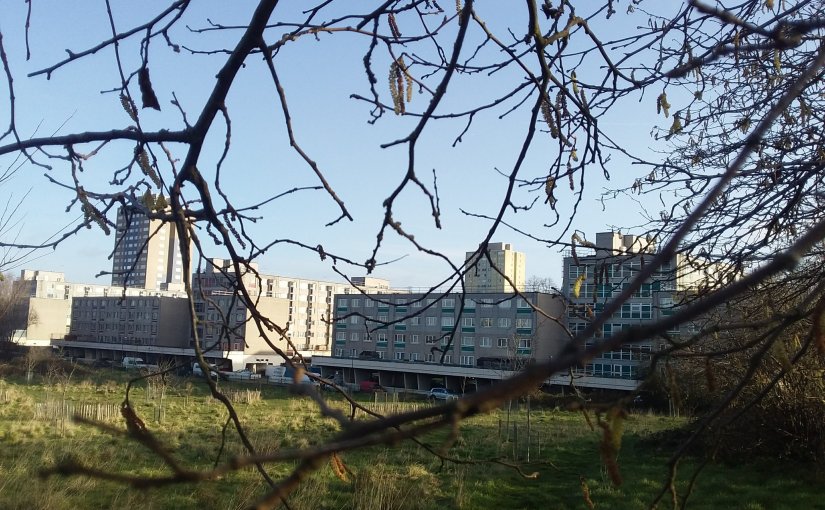
The row of hazel trees with Broad Water Farm Estate in the background

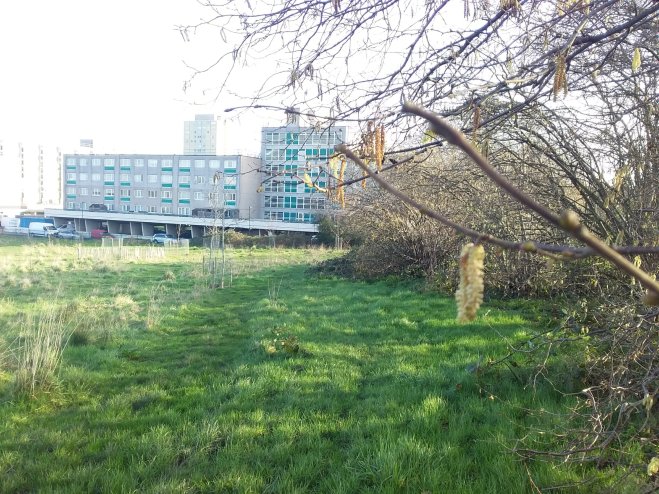
The hazel trees in this ‘copse’ (the name for an area of coppiced trees) look like they were previously a hedge but have not been managed for a decade or two.  This has lead to big bushy trees with dozens of branches and stems crying out to be coppiced.  Although the strip only has about 30-40 tree in it they still offer a chance to demonstrate coppicing to the local community and give them a chance to have a go themselves.

Right next door to the park is the infamous Broad Water Farm that was became known nationwide during the riots in the 1980’s.  Since then money and energy has been invested in the site and with the effort of the Broad Water Farm community and the local council its become an almost crime free area.

wp-1580918138485306080696.jpg
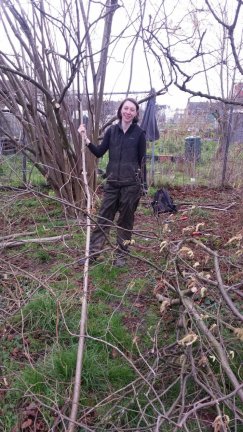
Keeping fit cutting all these 20 year old stems with hand tools

Even so, as with all areas, there are still a number of teenagers knocking about finding entertainment in spraying graffiti and making small fires.  As well as these bored teenagers are a number of residents suffering from the mental health problems that often come with modern city life and who could benefit from spending some time outside.

After speaking with a local housing support officer its clear that there is scope for some interesting woodland projects at the park that could really benefit the community at Broad Water Farm and the surrounding area.  As well as the hazel trees there is also a small woodland that has lots of work to be done.  So this could be a great spot for a little social forestry project.  They also have a cafe with spaces that can be hired out for workshops in a straw bale building.  While its early days for me, and taking groups out on my own is still a bit daunting, this looks like it could a be great future project to get involved in.

In the mean time I’ll be helping to get these lovely hazel trees back into rotation with a volunteer or two and bringing the skill and knowledge of coppicing back home to my local community.


(Note: Special thanks to The Friends of Lordship Rec, especially to Sally Haywell, who is in charge of the orchard in the park, and has been enthusiastic about getting the hazel back into rotation and letting me have a play.)

Getting People Back In The Woods

For many human beings the woods were our natural habitat.  Our ancestors spent thousands, if not millions, of years in this environment and so our senses are designed to cope with the ever changing sights, sounds, temperature and light that we experience in the woods.  Its no wonder we can go a little bit loopy when we’re stuck in the relatively static environment of the office or the school room that contrasts so starkly to our natural habitat.  Our senses don’t have enough to do and the energy is often redirected to mental rumination and stress.

Its not big news that a walk in the woods makes us feel better, but now we have the statistics and evidence to back this intuitive knowing and in Japan a practice called Forest Bathing has taken off and spread across the world.

The removal of clothes is not necessary to forest bathe, although what you do in your private woodland is up to you, instead it is an energetic bath, reducing neurochemicals such as cortisol, reducing heart rate and even effecting people with diabetes in a positive way.

So because of this a number of people are taking the baton and organising workshop and events under the banner of Social Forestry.

20191008_114907
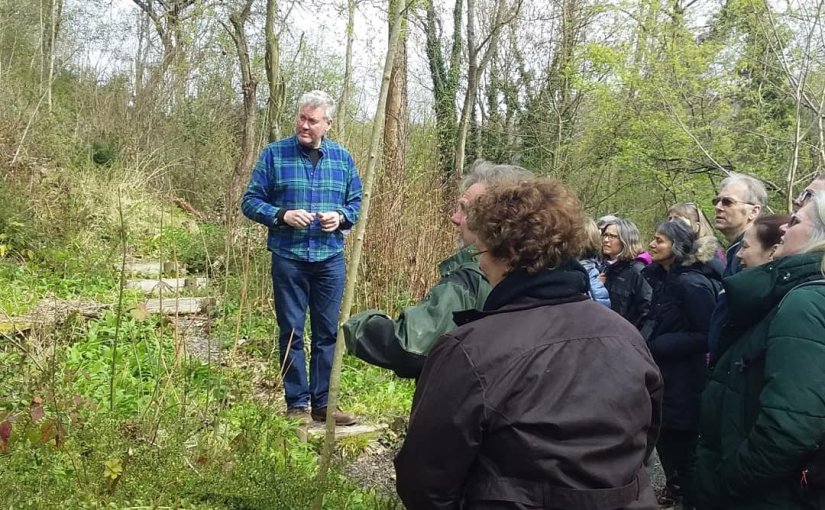
Rob teaching us about woodland management

Social Forestry is a fairly new term and is still deliciously being defined, but the gist of it is to get people back in the woods, not only for the wellbeing of the humans but for the wellbeing of the woodland habitat as well.

This latter part is important.  Forest schools and bush craft workshops tend to use the woodland as just an outdoor classroom space and the management of the woodland is sometimes not considered.  This can lead to woodlands being damaged.

For example,  if a group goes into woodland and it has a mix of conifers and young hardwoods such as oak, birch or cherry, the younger, smaller, hardwood poles will be easier for a group to clear.  However, in this case, the management plan might be to return the woodland to a mixed deciduous wood and so it would have been more beneficial to remove the larger, albeit more awkward conifers.

On a recent course at the Centre of Alternative Technology Julia Walling and Rob

20191009_154023
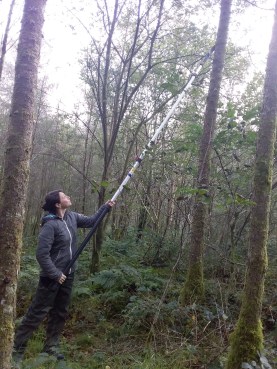
Using a pole saw to trim the bottom of conifers to allow more light into the woods.

Goodsell ran a Social Forestry course and took us through all the ways we can get people back into the woods, engaging with the environment in a meaningful way while benefiting the woodland itself.  Julia focused on the mindful aspects, inviting us to think about what makes us happy, how a woodland environment can fulfil these needs and showed us practical tasks to facilitate mindfulness.  Rob took us on a more practical journey through the kinds of tasks groups can do to help manage a woodland, such as scything, trimming branches and clearing bramble.

Of course there is an ultimate practical task that groups can do in the woods – coppicing!

Coppicing has the potential to be used by social forestry groups because it is a practice than can be done with hand tools and no previous experience.  It is highly beneficial to the biodiversity of the woodland and so you can enjoy a whole range of positive feelings from doing a good deed as well as spending time in a relaxing environment.

It is a sign perhaps of how chaotic and disconnected society has become from nature that we have to periodically flee to the woods to cope with it.  Forest bathing is a way to treat the symptom rather than the cause, but maybe if we’re all feeling little less stressed and a bit more centred we’ll be able to come up with better ideas on how to shape our society in the near future to one that suits our woodland natures better.


Turning Into A Basket Case

The truth must be told… My name is Suz and I am a basket addict.  It’s been two weeks since my last basket and I’m already having withdrawal symptoms.

I made my first willow basket a few months ago at the Greenwood Centre with the lovely Rachel Evans of Wheatcroft Willow and the group agreed to start with a more advanced type of basket, an oval shopping basket rather than the easier round basket. At first I didn’t understand the pattern at all.  I felt a swell of frustration rise up but persisted and under Rachels’ fine tutelage she got me past the first hurdle and I left the weekend with a beautiful shopping basket.


It is a sign of an excellent teacher to be able to guide eight or nine people in making a full blown oval based basket, especially as some of us were first timers, and then have them go away with something decent.  I know this because, since the course, I have had a go at teaching and although I understand the technique and can make a reasonable basket shaped object myself, teaching others to do the same takes some skill.

My first attempt was to run a bramble basket making workshop at the farm where I often visit.  Everyone was eager to learn this skill, and cut back the ever encroaching brambles, and with only four others it was fairly easy to get the basic techniques across.  However, my second attempt, at the crafty Treehouse Festival, things became a little more tricky.  Firstly, we were using pieces of willow from a tree that hadn’t been pollarded in a while so all the lengths were trimmed from this years growth meaning they were short and branchy.  Secondly, everyone wanted to make a basket!  I kept the group down to seven but that was still a tough amount of people to work with, especially as I was keen to make my own basket as well.

me and kay

The art to teaching is to keep calm.  It requires projecting confidence onto your students and giving them the patience that they need to give themselves as they learn a new skill.  It requires empathy as one remembers ones own frustrations and keeping them focused on moving forward.  It requires the right language and turning that language into visual instructions.  No one will understand what you mean if you say ‘now this bit goes into this bit’  – as I soon discovered.  It also required a never ending enthusiasm to answer the same questions over and over again.  But with all that said, I loved every second.  Some people even went away with something that looked very much like a basket.  Both of these opportunities were invaluable and were great steps towards doing something I really love to do – to teach.

#Evolvetheforest 2019

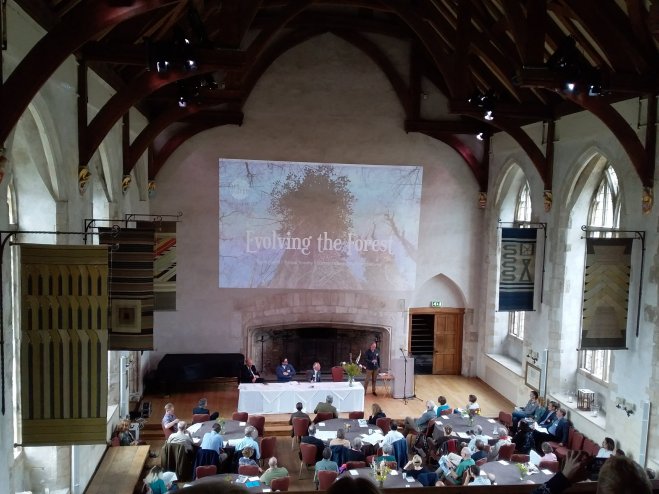
To say that the Evolve the Forest conference was a success would be an understatement.  The conference, organised by the Royal Forestry Society, ArtdotEarth and Timber Strategies and hosted by Dartington Hall, managed to do something that not even the organisers were sure they could pull off as they brought two seemly opposing worlds together: commercial forestry and art.

At first it seems like an odd combination but there was a common thread, namely our relationships to trees and woodlands and the threat that they currently seem to be under.

From a forestry perspective a tree is a crop.  It is grown in large quantities and harvested for economic and resource based reasons.  We all rely on wood and wood based products in our homes and going forward we may rely on them even more as we reduce our plastic usage and find other ways to create energy through biomass.  The seemly chaotic climate along with the increased threats from pests and diseases are a serious issue to this industry and organisations such as Forestry England are thinking hard about alternative trees and ways to grow them that will cope in an uncertain future.

20190621_1124341113133677.jpg

The artistic perspective brought in the emotional aspect of our relationships with trees and woodlands.  It’s undeniable that we have been enamoured with trees for a very long time.  They are present in our myths and our stories and hold a special place in the hearts of many cultures.

It is this emotional response to trees that can be helpful, and sometimes unhelpful.  My own perspective has changed dramatically since I became a coppice worker.  Before, as a city dweller, I’d bristle at the thought of any tree being cut down.  But now I understand that a woodland is a living entity, and the individual tree is a part of that entity along with thousands of other lifeforms.  Even so, respect is due to the individual tree and allowing a certain amount of emotion and reverence for the life of that tree influences the decisions that are made about it.

20190620_1604121907523809.jpg
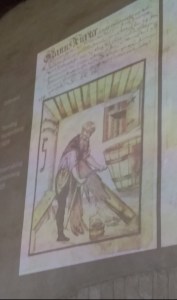
Illustration of a tanner using a draw knife to remove oak bark

The question of the conference seemed to be; how do we bring both of these perspectives together to create a culture of respect when managing woodlands and harvesting timber?  To encourage Each of the delegates were invited to step outside of their comfort zones and go to a lecture they may not be familiar with and that represented the ‘other side’.  There was a delightful moment when a grey haired gentlemen working for Forestry England gushed at how much he had enjoyed a particular lecture and that it wasn’t something he’d usually engage with.  Later on I saw the same gentleman enjoying a performance piece by Tom Marshman – We Need to Talk About Bambi, and I over heard him afterwards reflecting emotionally on the deer that he’d had to cull, a necessary but clearly not heartless act.  In another conversation an artist lamented over the need to kill deer at all and the forest manager student next to her explained why it was necessary to protect our woodlands from over browsing.

These were the moments that made this a very special and unique event, an event that will hopefully be repeated again in the future and perhaps include a speaker on the benefits of supporting coppice workers and the woodlands they manage.

20190619_1602141440646021.jpg


An Introduction to Woodland Management

I had a chance this weekend to really get my teeth into woodland management.  After spending a lot of time in the woods over the winter and taking part in coppicing, felling trees and watching tree surgeons top and lop, I was excited to be able to correlate some of my practical experience with the management side of things.

img_20190407_204644_4571976738240.jpg
A lovely old lime tree joins the circle

The workshop was led by Jim Waterson, who has managing woodlands for many years and now teaches other newbies like me.

Of course, my main interest is the coppice aspect of woodland management, but it was also interesting to learn about what is called High Forest – the trees that you don’t coppice.

Making a woodland management plan involves quite a few considerations.  These are short-term and long-term considerations, often thinking beyond your own lifetime.  A plan also needs to be clear and easy to understand so that who ever inherits the plan can understand what you were on about and what your vision for the woodland was.

A big consideration at this time is climate change/chaos.  We are in a period of unpredictable weather that could adversely effect our native woodland species.  With the prediction of rising temperatures and water levels we need to be thinking about what tree species are going to thrive best in this environment.  Some species of french oak might fair better in hotter climes and species such as lime and sycamore might be more hardy in hotter weather.  (Ideally, we’d be holding the industries responsible for climate chaos accountable and not needing to apply any damage control – but there you go.)

img_20190407_204644_461107305629.jpg
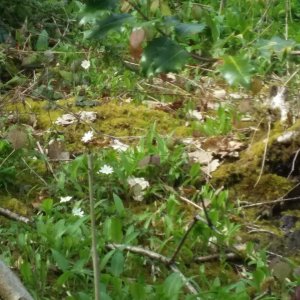
wood anemone

Pests and diseases are also on the up. This is due mostly to imports but is compounded by climate chaos which stresses the trees, leaving them more susceptible to attacks.

Management of a woodland comes with a fair amount of responsibility, especially if one has public paths.  However, even if you don’t have the public wandering through your woods you are still liable for taking measures to ensure that the woodland is well-managed and that any dangerous branch or tree is dealt with.  Public liability insurance is a good idea.

When it comes to the legal side of things most small woodland owners won’t need a felling licence.  One is allowed to fell up to 5 cubic metres per quarter and if you’ve just bought a 6 acre woodland.co.uk property you could probably cut your entire woodland down in a year with that (please don’t).  Some types of felling are also exempt and coppicing trees under 150mm comes under this, which is handy.  But make sure you check with your local tree officer before undertaking any work.  Any trees cut down that are in a designated area and require a license or have a Tree Preservation Order could leave you in court.

If you are interested in taking one of these courses then get in touch with the Small Woods Association or do a quick search online and look out for Jim Waterson.


A Nice Day Out

One of my passions in life is getting people back into the woods.  It is so important, not only to encourage people to spend time out side, and away from cities, but also to get people working outside.

As a consumer culture we often experience the woods as just another nice day out.  But this kind of relationship can create a sense of seperation from our enviroment and bring on feelings of detachment.  We become outsiders peering into an alien landscape meant for other living things that we call ‘nature’.  What we seem to have forgotten however, is that we are part of that natural environment!  Before the onset of agriculture, and more recently indistrial civilisation, the woodland was our home for thousands, if not millions of years.  But fear not.  This sense of oneness returns when one engages directly with the woodland environment through hard graft.  The primal instinct and ancient connection reemerges.

20190223_121625967898869.jpg

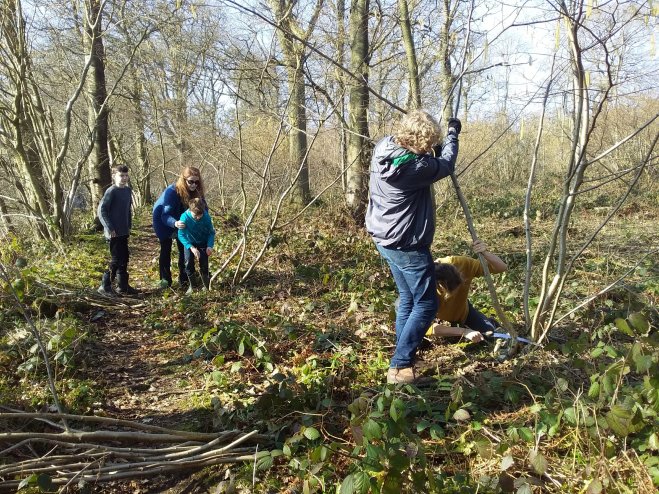
With this all in mind it was an absolute delight to put on my first community coppicing event.  For one unusually sunny February day 14 people had a chance to get their hands dirty and bring light and warmth back to the woodland floor, as has been done so previously for centuries.

Even better was the attendence of a local scout troop!  In the era of ipads and social media it was encouraging to see the focus and enthusiam of these children as they engaged directly with the work.  They loved it so much they were keen to know when they could come back again!  And, with the help of the other adults, all children left with complete sets of fingers, which I was very pleased about indeed.

20190223_1127251056308894.jpg

Coppicing is a perfect way to get people back into the woodlands and learning how important it is to manage this type ecosystem.  A coppice expects to be cut, and the more we leave them to overgrow the more, ironically, we damage the environment.  A coppice also lends itself well to volunteer work because of the simplicity of the work and the tools that are used.  Anyone who can use a pruning saw and some loppers can get involved.  And the more we get people involved the more we can send out the message that we have a great solution to managing our woodlands in a sustainable way and providing our communities with amazing, high quality wood based products.

IMG_7429


Making a Chair Part One

wp-154110864399840540501.jpg
Me on a shave horse

Yesterday I had the honour of working with Small Woods Heritage Craft Officer, Neill Mapes.  Neill was running the fantastic Build A Bench workshop with a group of local people.  The group were already well ahead of me with their welsh stick chairs so I decided to make a start on a milking stool instead.  This will be my first chair and I’m very excited about it.

The first job was to cleave some ash into leg sized pieces.  Next an axe was used to pare down the legs into a leggy shape, and prepare the end to be more or less the same size as a 1 inch tenon cutter.  The legs were shaped further on the shaving horse with a draw knife.

To attach the legs to the chair I will be using green wood working.  This means that I will dry the legs by a radiator for a few days then attach them to a ‘green’ seat.  As the unseasoned green seat drys it will shrink around the legs, meaning that, apart from a few wedges, there will be no need for screws or nails.  Ingenious!

I cut the seat out on a bandsaw and its ready to go once the legs have dried.

wp-15411088473351334791125.jpg
lots of legs


The National Coppice Federation Gathering 2018

wp-1539720532578975038844.jpg
products made from bark

Not everybody would be excited to talk about coppicing for a whole weekend but I certainly was.  So it was a delight to attend the National Coppice Federation on their annual gathering in Hampshire.  Each year one of the regional groups takes the baton and hosts the get-together which, although relatively small, is one of the only chances that members of the coppicing community have to meet up.

Some people arrived on the Friday and met old faces and new.  Then, on the Saturday, we had a chance to see some of the local craftsmen practicing their skills alongside two demonstrations of retort charcoal makers.

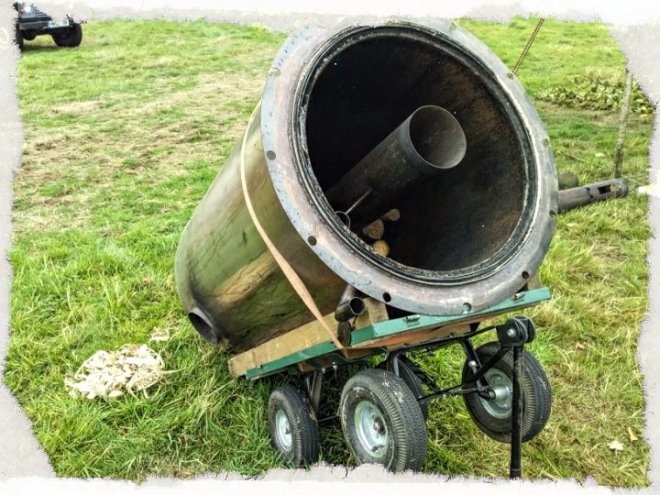
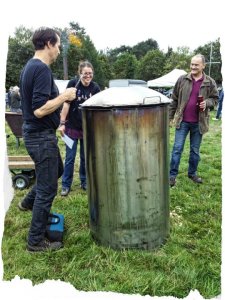
A retort charcoal maker, as opposed to a ring kiln or an earth mound kiln, uses the volatile gases that the wood itself gives off when its burnt and redirects it back towards the fire.  This means that once the retort has heated up enough it will keep itself alight until all the gases burn off.  And because that gas is used up it no longer gets pumped out into the atmosphere.  wp-1539720425278381605499.jpg

wp-15397204665771782014684.jpg
James Hookway showing us how it works

I took a particular interest in the smaller retort that was basically a giant rocket stove.  The designer was a gentleman called James Hookway and this was his own unique design that, although small, was portable and very easy to use.  This retort was just the right size for someone just starting out in the charcoal making business or looking to just use the unproductive wood that is no good for products or leaving as insect hotels.

During the gathering we also took a trip to a local sweet chestnut coppice at Stansted Park Estate and was kindly shown around by the head forester Michael Prior.  Michael had been working at the estate for 38 years and although they had an extensive sweet chestnut coppice he was also keen on biodiversity and you could tell he enjoyed his job very much.

wp-1539720697875646386209.jpg
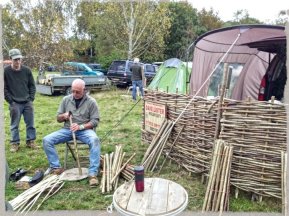
Dave Lister demonstrating thatching spar making

The NcFed gathering was also a chance to network and meet other people who you could connect with and either share skills, news or work.  For me it was just nice to be around people who knew what coppicing is!  Most of the time a get a very blank stare when I tell people I’m doing a coppicing apprenticeship.  Hopefully groups such as the NcFed will change all that in times to come.