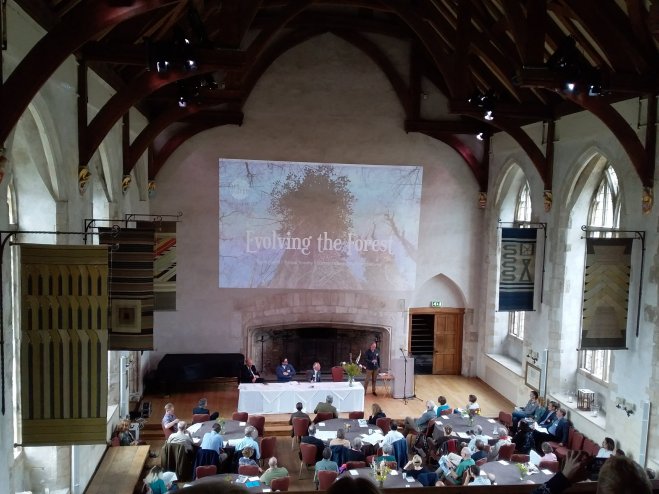
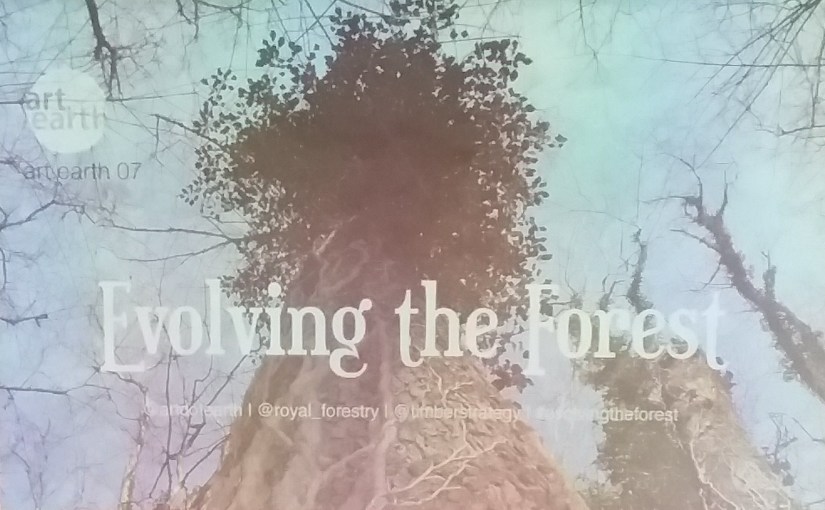
To say that the Evolve the Forest conference was a success would be an understatement. The conference, organised by the Royal Forestry Society, ArtdotEarth and Timber Strategies and hosted by Dartington Hall, managed to do something that not even the organisers were sure they could pull off as they brought two seemly opposing worlds together: commercial forestry and art.
At first it seems like an odd combination but there was a common thread, namely our relationships to trees and woodlands and the threat that they currently seem to be under.
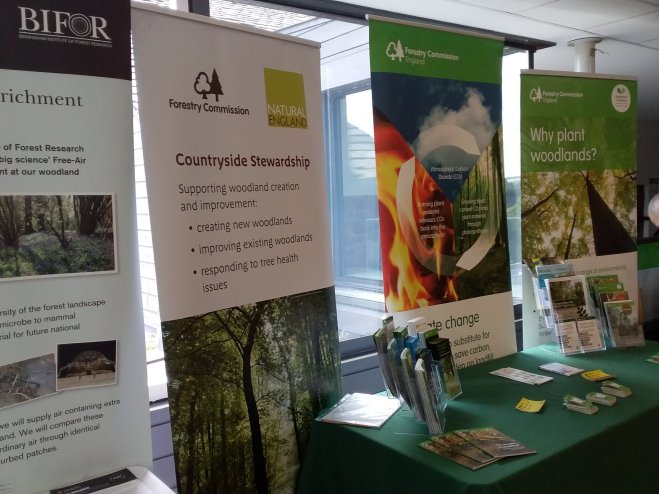
From a forestry perspective a tree is a crop. It is grown in large quantities and harvested for economic and resource based reasons. We all rely on wood and wood based products in our homes and going forward we may rely on them even more as we reduce our plastic usage and find other ways to create energy through biomass. The seemly chaotic climate along with the increased threats from pests and diseases are a serious issue to this industry and organisations such as Forestry England are thinking hard about alternative trees and ways to grow them that will cope in an uncertain future.
The artistic perspective brought in the emotional aspect of our relationships with trees and woodlands. It’s undeniable that we have been enamoured with trees for a very long time. They are present in our myths and our stories and hold a special place in the hearts of many cultures.
It is this emotional response to trees that can be helpful, and sometimes unhelpful. My own perspective has changed dramatically since I became a coppice worker. Before, as a city dweller, I’d bristle at the thought of any tree being cut down. But now I understand that a woodland is a living entity, and the individual tree is a part of that entity along with thousands of other lifeforms. Even so, respect is due to the individual tree and allowing a certain amount of emotion and reverence for the life of that tree influences the decisions that are made about it.
The question of the conference seemed to be; how do we bring both of these perspectives together to create a culture of respect when managing woodlands and harvesting timber? To encourage Each of the delegates were invited to step outside of their comfort zones and go to a lecture they may not be familiar with and that represented the ‘other side’. There was a delightful moment when a grey haired gentlemen working for Forestry England gushed at how much he had enjoyed a particular lecture and that it wasn’t something he’d usually engage with. Later on I saw the same gentleman enjoying a performance piece by Tom Marshman – We Need to Talk About Bambi, and I over heard him afterwards reflecting emotionally on the deer that he’d had to cull, a necessary but clearly not heartless act. In another conversation an artist lamented over the need to kill deer at all and the forest manager student next to her explained why it was necessary to protect our woodlands from over browsing.
These were the moments that made this a very special and unique event, an event that will hopefully be repeated again in the future and perhaps include a speaker on the benefits of supporting coppice workers and the woodlands they manage.