
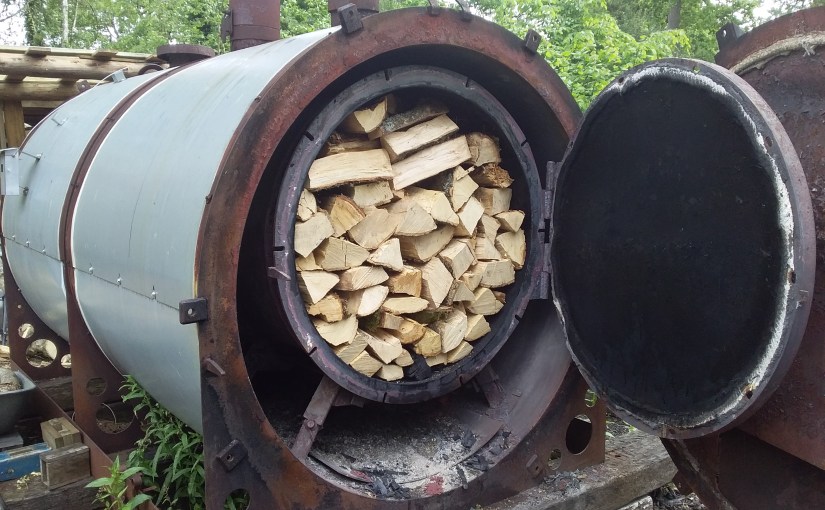
It’s almost summer so it must be time for charcoal making! This week I was at Westonbirt Aboretum where Brian Williamson has been restoring their coppice and making, among many other things, charcoal.
Charcoal making has this air of romance. I don’t know if its the plumes of smoke – that is actually mostly moisture – the site of people covered in black dust or the anticipation and skill in actually cooking the wood and not burning it all… or leaving it half baked, but it harks back to something earthy and oldy worldy.
In those olden days people would use earth mounds to cook their wood and this can still be seen at events such as Char Fest, which is hopefully being held again this year for new enthusisasts such as myself. Up until recently the ring kiln was the charcoal makers tool of choice. This involved lighting a fire inside the kiln and adjusting chimneys and vents to control the air flow and temperature. It also involved climbing in the kiln to shovel out the charcoal… which, I am told, is a very messy job indeed!


These days we have a marvellous instrument called a retort. Not only does it have an almost 100% converstion rate, (we only had two or three ‘brown ends’ – the name of undercooked wood – out of the entire burn) it also resuses the gases expelled by the wood as it cooks. A fire is needed to start the whole thing off but when it reaches 420 celcius the retort will use the methane gas from the cooking wood and it becomes self-perpetuating until the gas has been used up. And you don’t have to climb in the thing to get all the charcoal out.
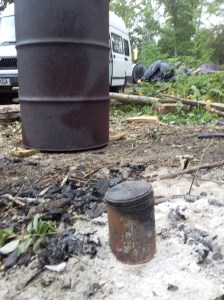
I didn’t get a chance to try out the ring kiln but I did see how a retort, an oil drum and even a tin can will turn wood into charcoal and I’m looking forward to practicing the latter two when I get home.
“Why use charcoal?” I asked, hoping I wasn’t about to shoot myself in the business foot. But Brian gave some good answers… charcoal burns at a hotter temperature, turns into embers quickly and has no smoke. The charcoal that is made by local woodland and coppice workers also has the added benefit of being additive free, has reduced transport miles and of course it supports us woodland folk to support our woodlands. Sounds good to me!


