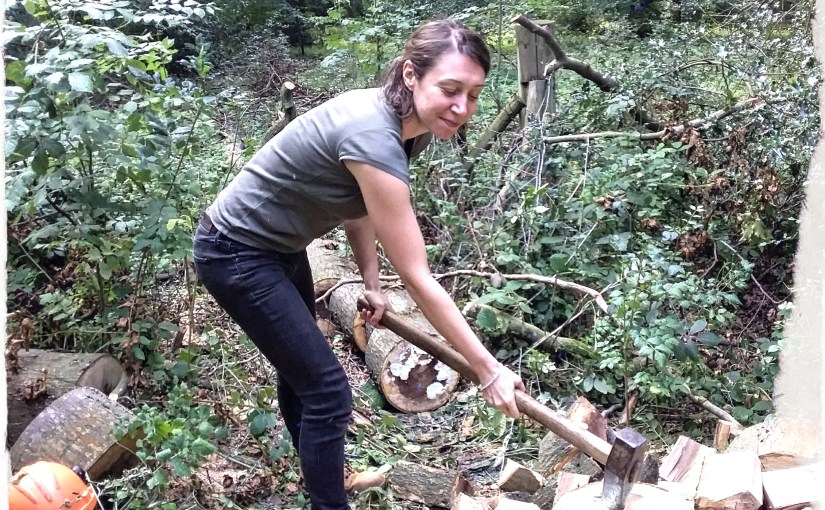
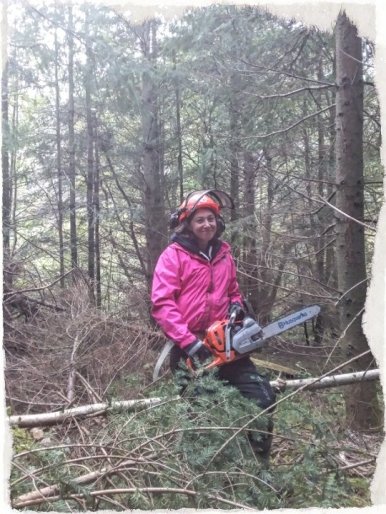
As most of my friends will tell you, I am a raging hippy at heart and one of the conflicts I have about being a coppicer is the idea of cutting down trees. So this week the internal conflict has been at full volume as I’ve been learning how to use a chainsaw.
As someone who grew up in a city and only experienced woodlands as a ‘consumer of
the woodland experience’ I had no idea how much management, and cutting, occurs in a woodland. The thing that I am beginning to realise is that woodland ‘management’ from humans and our ancestors has been going on for so long that the very ecosystem has evolved around human activity. It expects us to clear small parts of the forests periodically so that certain flowers will grow. It expects us to burn things and thin areas out. We protect it from diseases and invasive species, yes so that we can get materials for ourselves, but this is a symbiotic relationship. The relationship has only changed extremely recently to a parasitic one since we’ve been turning wood into money instead of just useful products and materials.
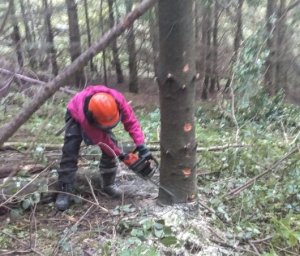
With that said, chainsaws still feel a little too imposing. But at the end of the day they are a great tool to have if you ever need to cut a tree down or cross cut logs.
During this week we’ve learnt all the basics of chainsaw maintenance, felling cuts and all the health and safety stuff that goes with cutting huge bloody trees down. One of the common issues with cutting down conifers in plantation woodland is getting a ‘hung’ tree. A hung tree is a tree that you’ve cut but has been caught up in the nearby trees instead of falling to the ground. This happened on most of my cuts and there are several ways you can deal with it.
One of the ways is to lightly ‘feather’ away the ‘hinge’ with the chainsaw. I know. ‘Feather’ and ‘Chainsaw’ don’t really seem to match but in some circumstances, plunging straight in with the chainsaw will pinch the saw between the tree and the stump, so when one ‘feathers’ with a chainsaw you are lightly brushing the wood with the saw so that it doesn’t get trapped. When you feather away a hinge you leave about 20% of the hinge attached. The hinge is extremely important as it gives the feller a certain amount of control and predictability over where the tree will fall. If you take the whole hinge off too early it can topple in an unexpected direction.
Once you have a peg you can then use a pole or a felling bar with a hook to lever the tree to one side. This, however, doesn’t always work. When you’ve tried every other option thats safe to use – surfing on top of it is a no no unfortunately – then its time to get the winch out as we did today.


I’m happy to say that I won’t be cutting too many trees down, unless they are well chosen standards to bring more light into a coppice. However, using chainsaws for coppicing is another thing all together and I look forward to seeing how that all works in the near future.